The Story

From wandering minstrel to warlock bard to the inventor of rock. The chronicle of Dustin Dwint.

Chapter 1 — The Trade Way

Friends New and Old

A half-elf bard with a silver flute, a paladin with a flair for the dramatic, and a road south that promises a festival — but delivers something else entirely.

Arrival in Waterdeep

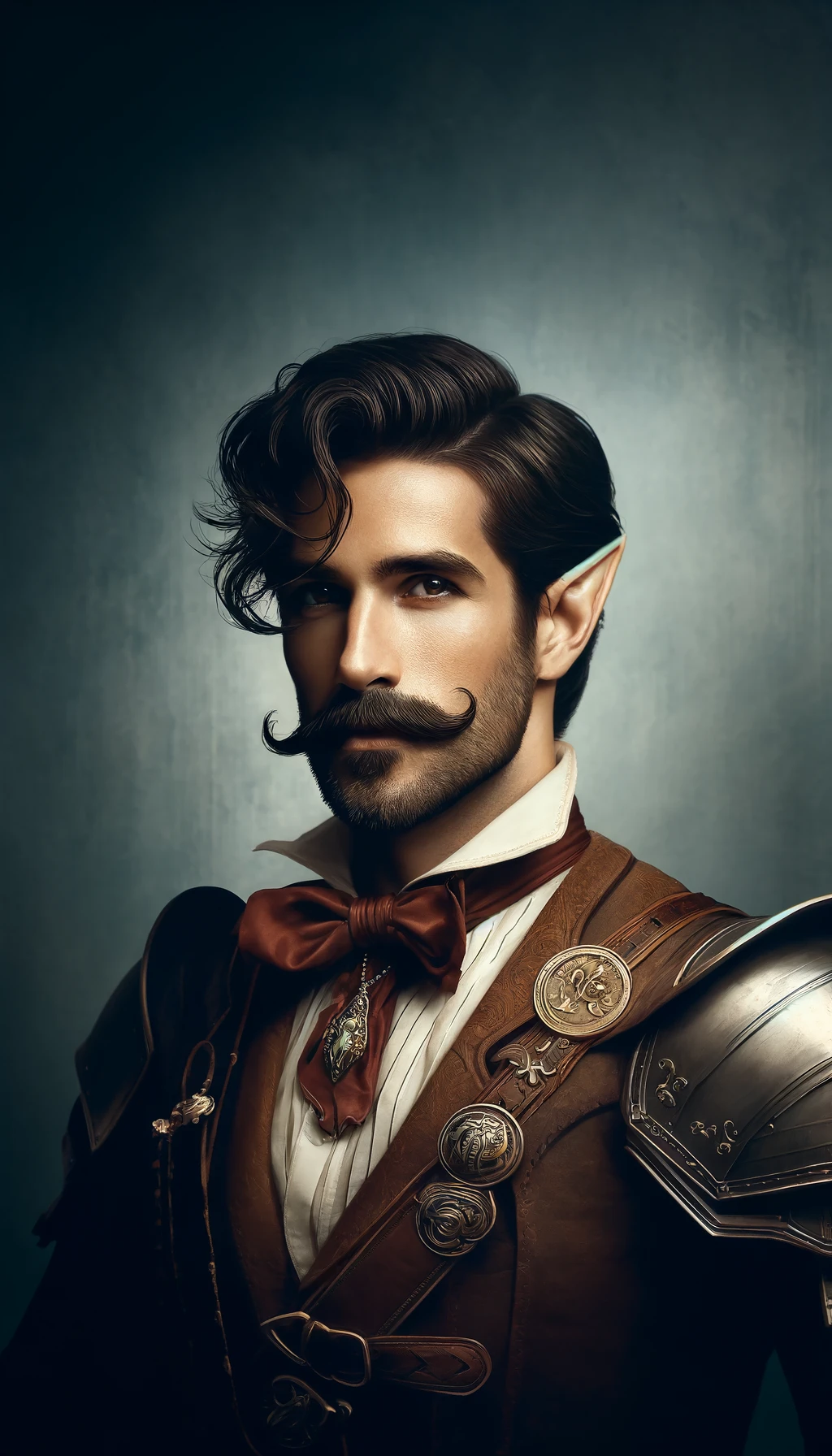
The Wanderlust Revue rolled into Waterdeep on a cool autumn morning — a ragtag band of performers, their wagon loaded with costumes, props, and more instruments than any reasonable troupe should own. At its heart were two friends: Dustin Dwint, a half-elf bard with red hair and a silver flute, and Don Juan, a half-elf paladin whose swordfighting was as much performance art as it was combat.

Waterdeep, the City of Splendors — the greatest city on the Sword Coast. A maze of wards and markets, noble villas and dockside dives, all stacked on top of each other. For a travelling troupe hungry for an audience, there was no better place to be. Taverns, inns, and alehouses on every corner, each one a potential stage.

The plan was simple: book as many gigs as possible across the city's many establishments. The Yawning Portal, the Skewered Dragon, the Dock Ward dives — every venue that would have them. But first, they needed to draw a crowd. Dustin composed a lively, infectious anthem to be performed on the squares and market plazas of Waterdeep — to play in the open, attract curious passersby, and funnel them toward the evening's shows.

01 Here Comes The Wanderlust Revue 3:48

It worked. Dustin would set up on a busy square with his flute while Don Juan drew a crowd with a flashy display of swordwork. By the time the chorus hit, half the square was singing along, and the evening show was guaranteed a full house.

The Nightstone Invitation

But after a few days, the reality of Waterdeep set in. The city was vast, and the competition fierce — every corner had its own busker, every tavern its house musician. The crowds at the Revue's shows were decent, but not what they'd hoped for. Waterdeep had too many distractions to give a travelling troupe the attention it deserved.

It was while wandering the streets between gigs that Dustin and Don Juan spotted a poster nailed to a notice board. An invitation — a call for performers to come to Nightstone, a small settlement south of Waterdeep, for a festival. The details were enticing enough to make them stop and read.

Nightstone Festival

Join us in the grand celebration of Lady Velrosa Nandar's 60th birthday at the Nightstone Festival!

Seeking talented bards and performers to grace our stage with mesmerizing acts and enchanting melodies.

Brave souls, we need your strength! Keep the order and peace throughout this jubilant occasion.

Save the date: Next full moon Location: Nightstone, between Waterdeep and Daggerford For inquiries: Contact Morak Ur'gray at Nightstone Inn.

Don't miss out on this unforgettable event! Let's make Lady Velrosa Nandar's milestone birthday a night to remember!

Back at the inn, they brought it to the rest of the troupe. The discussion was brief. The Wanderlust Revue had enough shows booked in Waterdeep to keep the rest of the performers busy — they could manage fine without two of their number for a while. Dustin and Don Juan would head south to Nightstone and see what this festival had to offer. The rest of the Revue would carry on in the city.

It seemed like a simple detour. It would prove to be anything but.

Don JuanThoughtsA Noble Audience

The festival is ideal for our travelling theater group. Don Juan is eager to demonstrate his skills with the sword to Lady Velrosa and enjoy the festivities in the presence of the local nobility. A patron among the landed gentry — now that would be something. Fine wine, fine company, and an audience that appreciates the finer points of swordsmanship. What more could a man ask for?

The Road South

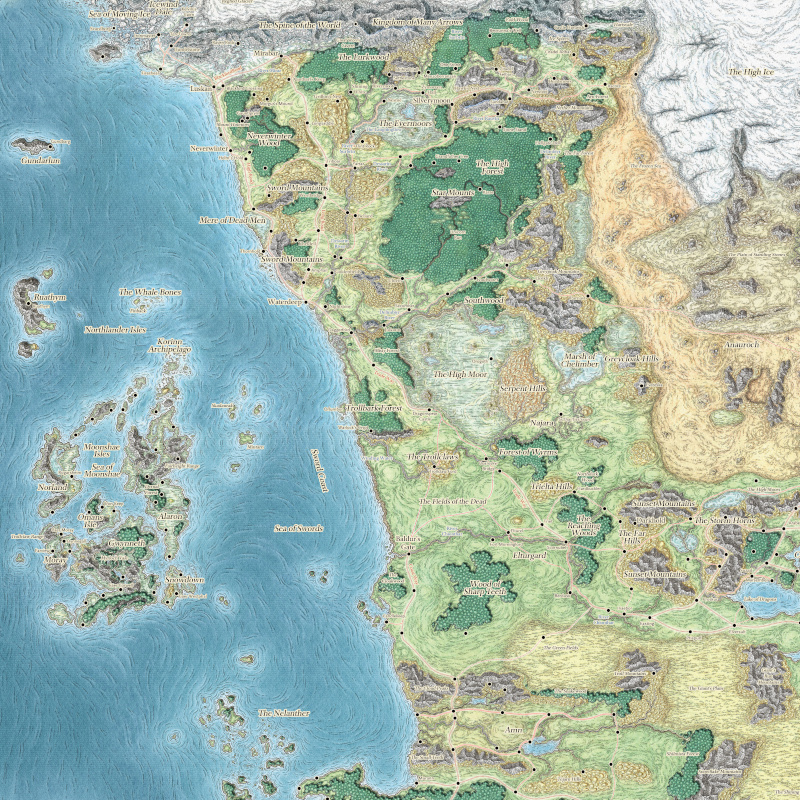
The journey from Waterdeep to Nightstone followed the Trade Way south toward Daggerford — a well-travelled road through rolling farmland and sparse woodland. Dustin and Don Juan made good time, but the road was long enough to warrant a rest.

They stopped at a clearing by the roadside. Don Juan leaned against a tree, polishing his blade and musing aloud about what awaited them. A noble's birthday — Lady Velrosa Nandar herself. He grinned at the thought of performing swordwork before local nobility, maybe even earning a patron or a letter of recommendation. The good food and wine wouldn't hurt either. Before long, the musing trailed off and Don Juan dozed off against the tree, sword still in hand.

Dustin, meanwhile, sat cross-legged on a fallen log, his flute in hand. He'd been composing a piece for the occasion — something fitting for a lady's celebration. Bright, warm, celebratory. He ran through the melody again, refining the phrasing, letting it ring out across the empty road.

02 Velrosa's Celebration 2:10

Dustin lowered the flute and frowned. Something about the last verse didn't sit right. Is this the right approach? he thought. Maybe there is no banquet. Maybe the celebration is more intimate, or maybe…

His train of thought was broken by movement on the road ahead. A huge silhouette came around a bend — impossibly tall, broad-shouldered, carrying itself with a stride that was proud, determined, fearless. Something about the figure felt familiar. Not just the size, but the way he moved.

As the figure drew closer, the features came into focus. The grey skin, the strong jaw, the unmistakable build of a goliath — and not just any goliath.

Dustin's eyes went wide. He leapt to his feet, the flute nearly tumbling from his hands, and broke into a sprint down the road.

"Kürbis!!!"

The shout rang out across the countryside, raw and overjoyous, the voice of a man reunited with someone he thought he might never see again.

"Aric!! You here!!!" Kürbis bellowed back, his deep voice carrying even further.

When Dustin reached the goliath he jumped up and threw his arms around his neck, barely able to contain his joy. "Big friend, what a great surprise to see you! What in the heck are you doing here, so far away from the Ice Spires?"

"Just wandering around, heading to Daggerford," Kürbis said with a shrug. "Looking for a job. And you?"

"We are heading that direction too — on our way to Nightstone for Lady Velrosa's birthday. I'm planning to play there."

"Need some help carrying stuff?" Kürbis offered.

"This is just great! I can't believe my luck," Dustin laughed. "Actually, I think they are still looking for people for security at the festival in Nightstone. You can join us!" He gestured back toward the clearing. "I want to introduce you to my friend Don Juan. He's part of the Wanderlust Revue — you remember the travelling band of bards in the Silver Marches? But he seems to have dozed off while I was rehearsing. Let's sit down and catch up."

They walked back to the clearing and settled down. Kürbis eyed the sleeping paladin, then turned back to Dustin. "So, security — that's my cup of tea. Does it pay well?"

"I'm not the employer," Dustin said, raising his hands. "The poster said they need brave souls to keep order and peace. And talented bards with mesmerizing acts and enchanting melodies. I will provide the latter. My friend Don Juan is very good with a sword — he is, among other things, our sword juggler in the Revue."

"Oh, a sword juggler..." Kürbis said, unimpressed. "I'm more of a sword hack-and-slasher."

"Oh, don't let impressions fool you — he is also our most skilled fighter and best guard of our band of entertainers."

"Do you need protection with your band?"

"The rest of the band is still in Waterdeep. Just the two of us took a few days off to travel to the festival."

"Ah, the Wanderlust Revue," Kürbis nodded slowly. "Yes, it rings a bell."

"The band is doing fine — we grew quite a bit since we went our separate ways. But we can always use some more protection," Dustin said. "Let's go to the festival together and we can discuss employment with the others when we get back to Waterdeep."

"Sounds like a plan. Not that I have any appointments."

"No appointments — ha, good one. Have you been roaming around by yourself all these years?"

"Yes," Kürbis said. "In circles. Trying to set a speed record each time."

"I see you haven't changed — still as competitive as ever."

"Just faster."

A loud yawn interrupted them. Don Juan stirred against the tree, blinking awake. He looked up at the enormous figure sitting across from Dustin and his eyes went wide. "By Tyr's beard, who is that towering friend of yours, Dustin?"

Tyr did indeed have a glorious beard.

"Don, meet Kürbis!" Dustin said with a big grin. Turning back to Kürbis, he added, "Oh yeah — people call me Dustin nowadays. You know, music business and all."

DustinBackstoryDon Juan

In the city of Yartar, the Wanderlust Revue had gained a new member. Don Juan — a half-elf paladin of Tyr, sworn to justice — joined primarily as a guard. He was noble-born, though reluctant to speak of his past, and carried himself with the quiet confidence of someone who had been raised to lead and chosen not to.

His swordfighting drew crowds before he said a word. The Revue quickly put him in the acts — flashy bladework, dramatic flourishes, the kind of performance that made audiences forget they were watching a man who could kill them without breaking a sweat. Don Juan took to the stage with the natural ease of someone who had been performing a different kind of role his entire life.

Dustin and Don Juan became fast friends. They sparred — Don Juan teaching swordplay, Dustin teaching him to read a crowd. Beneath the banter, they recognised something in each other: two men carrying debts they hadn’t settled, searching for purpose in the space between entertainment and justice. Don Juan became the closest thing Dustin had to a brother since Jorlan.

A Stranger on the Road

They talked for a while — old memories, old roads, old jokes. Kürbis wanted to know everything about the Revue. Dustin wanted to know how fast the speed record was now. Don Juan, meanwhile, made sure to mention his sword skills at least three times.

It was Don Juan who first noticed the figure on the road. A lone traveller in a dark cape, walking slowly along the verge. As the cloaked stranger passed their clearing, it offered a silent nod of greeting.

Kürbis, ever curious, approached. "Greetings, traveller. What brings you to these roads?"

The figure paused and pulled back the hood. An old woman — frail but kind, with streaks of grey and white through jet-black hair and green eyes that sparkled with warmth despite the deep wrinkles around them.

"My my, by the gods!" she said, her voice thin but bright. "I can't tell I've ever seen so strong a fellow in all my years."

"I don't carry much at my old age," she continued. "I am just trying to get to Nightstone to meet an old friend in time for the festival. You must also be going there! Are you an adventurer?"

Don Juan was already on his feet, offering an elegant bow. "Allow me to introduce myself, good lady. The name is Juan Francisco Montoia De La Roja. My friend over there is called Dustin Dwint and is known far and wide for his musical talent. Together, we are members of the Wanderlust Revue. Please — you are welcome to travel with us. The roads are unsafe and bandits lurk around every corner. You would be safe with us."

"Let me carry the luggage," Kürbis said quickly, stepping forward before Don Juan could offer.

"Ha ha, by all means, my Goliath friend!" Don Juan laughed. "You look more than capable."

The old woman smiled. "True chivalry isn't as dead as they say, it seems. Thank you for your kindness, strangers. To tell you the truth, I wouldn't mind a bit of company."

As Kürbis leaned down to take her bag, she reached up and pinched his cheek gently. "Thank you, my dear boy."

GriThoughtsHeavy Purses

Definitely an event Gri would want to attend. It's easier to go incognito in large crowds, and there's bound to be some heavy purses to lighten up. Plus it's a good opportunity to escape the city for a while. It can be quite oppressive. An old woman's disguise would do nicely — nobody suspects a grandmother on the road.

The Campfire

Camp on the Trade Way

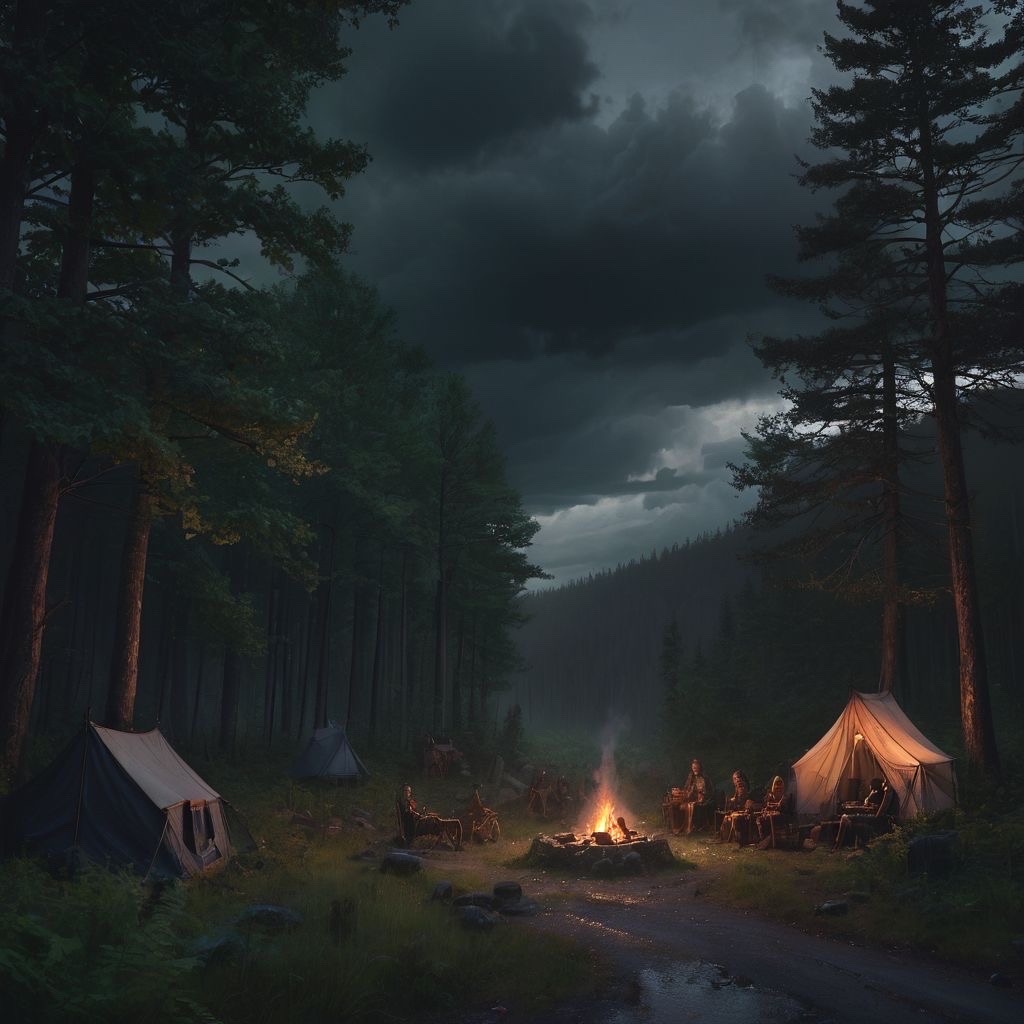
Night was falling. They had reached the junction where a smaller road branched east off the Trade Way toward Nightstone, but the village was still miles away, and fate decided they would have to make camp here.

Kürbis, with the practiced ease of someone who had made a thousand camps, selected a spacious clearing surrounded by trees. He built a roaring fire while the others settled in. Don Juan produced wine. The old woman, whose name they still hadn't caught, seemed content to sit close to the fire and watch.

Don Juan eyed Kürbis with sudden recognition. "Say, Dustin — is your friend the Kürbis? From your song? The famous hero you sing about in every tavern?"

Kürbis looked at Don Juan. Then at Dustin. "'Kürbis from the song?'"

Dustin cleared his throat. "Ahem. Who wants to hear a song?"

"Sí sí, Dustin, play a song, amigo!" Don Juan said.

And so Dustin took out his lute, and by the flickering firelight, he played the ballad he'd written years ago — the song of Kürbis Kohl, a tribute to the towering Goliath and the journey they'd shared through the frozen mountains.

03 The Ballad of Kürbis Kohl 2:58

Kürbis listened in silence, his expression unreadable. Whether he was moved or mortified, it was hard to say. Probably both.

DustinBackstoryThe Wanderlust Revue

While travelling through the Silver Marches with his friend Kürbis Kohl, a Goliath he had been journeying with for some time, they encountered a band of travelling entertainers called the Wanderlust Revue. Drawn by their music and camaraderie, Aric decided to join. It meant parting ways with Kürbis. The farewell was brief — neither of them was good at goodbyes — but Aric vowed to honour the friendship and the debt he owed.

With the Revue, Aric learned to truly play — not just the birdpipes of his childhood, but the flute and the lute. A senior bard in the troupe took notice of his raw talent and became his mentor, teaching him the intricacies of spellcasting and the ways in which music and magic intertwine. Under this tutelage, Aric became a bard in earnest — learning to channel emotion into power, to weave enchantment into song.

One song in particular — a stirring ballad about a Goliath hero who rescued a slave from the mountains — captured audiences far and wide. He never mentioned his own role in the story. He named it The Ballad of Kürbis Kohl. Older members of the band remembered the Goliath who had been travelling with Aric when he first joined, and smiled.

The song gave him his stage name. Aric Stoneheart became Dustin Dwint — the artist, the performer, the bard who wrote songs about real heroes and real debts.

A Busy Road

As the last notes faded, the road proved busier than expected.

First came an old male elf, stepping into the firelight with a polite "Hello, can I join?" Kürbis waved him over. "Of course. Come, warm yourself by the fire and share in our company."

The elf introduced himself as Mindartis — a High Elf from Waterdeep, also heading to Nightstone. He'd been invited to the party of Lady Velrosa, whom he knew from years past.

"Why, this road is busier than a potion shop on the day they hand out free samples of Elixir of Eternal Youth!" Don Juan exclaimed. "How come there are so many elderly folk up and about?"

Close behind Mindartis came another figure — an older human man, muttering to himself and looking thoroughly confused. Mindartis's face lit up. "Archibald! You have finally come from behind your desk!"

"Mindartheus! Is it you?" The old man squinted, struggling to place where he was.

"Yes, my old friend."

"Where are we going?"

"By Tyr's bloody balls," Don Juan muttered, "the entire geriatric ward of Waterdeep seems to have escaped." He raised his voice. "I guess we have some room left by our fire. Come join us, old man! Would you like some wine?"

Archibald looked behind him. After squinting his eyes and failing to see anything, he slowly turned back. "Ah. Yes. Clearly I am the eldest here present. If wisdom comes with age, I would certainly be one of the wisest wizards in all of Faerûn. But tell me, young whippersnapper — why do you still need a hand getting your armor on straight in the morning?"

The wine flowed, and Archibald launched into one of his stories — something about a vintner from Cormyr, a debate about magic in winemaking, and a competition that Archibald naturally claimed to have won. The tale went on. And on. Don Juan dozed off mid-sentence and woke with a start as silence finally fell.

"Uh... I'm sorry... your voice is so soft and gentle... like a succubus tongue gently caressing my brain!"

"I am sure she will be suffering from a sensation of emptiness then," Archibald replied dryly.

MindartisBackstoryThe Peace Treaty

Mindartis knows Lady Velrosa from a couple of years ago. He definitely wants to attend the party and ask her some questions about how things have been since he was gone — especially how it has been between the elves and the humans after he brokered a peace treaty. Peace. Such a fragile thing.

ArchibaldThoughtsOn the Subject of Peace

Ah yes. Peace. Such a fragile thing, easily shattered by the whims of fate or the machinations of those who seek to sow discord. We must remain vigilant, ever watchful for signs of treachery or betrayal, lest the fragile bonds of peace unravel and plunge us back into the darkness from which we have emerged. Darkness like the one that lurked within the pages of a tome of ancient spells in the depths of the Arcane Library. Oh, the whispers of shadow and secrets that beckoned to me from beyond the veil of reality. I could feel its tendrils reaching out to me, pulling me deeper into its embrace with promises of forbidden knowledge and untold power.

I spent countless hours poring over its secrets, unlocking the mysteries of the arcane with each turn of the page. The darkness within those pages was both terrifying and intoxicating, a tantalising glimpse into the unknown depths of the cosmos. And yet, for all its allure, I knew that delving too deeply into its depths could lead to madness or worse...

At this point, Archibald realises he has completely lost his train of thought and struggles to regain his composure.

The Dragonborn

The night deepened. The fire crackled. The music drifted across the road and into the darkness beyond.

Dustin didn't know it, but out there in the shadows, someone was listening.

A dragonborn warrior named Zarok Stormscale had been watching from behind a rotten log for some time. He'd left a merchant caravan near Daggerford — restless, hungry for purpose, drawn by the same festival poster that had brought them all here. Now he crouched in the dark, puzzling over this noisy campfire of apparently fearless strangers.

"They are not worried at all," he thought. "That hulky figure must be the reason. Or their wine was too strong."

He waited. He listened. And then Dustin picked up his lute and began to play something new — a song about dragonborn, about scales and thunder and ancient kin.

04 The Mighty Dragonborn 2:24

The music reached Zarok like a thread of fate. His scales hummed. Something in the melody stirred recognition, pride, longing.

He couldn't stay in the shadows any longer.

Hands held up, axe strapped to his back, Zarok stepped into the circle of light.

"Oghma!" Dustin exclaimed. "I did not know my music has the power to summon!"

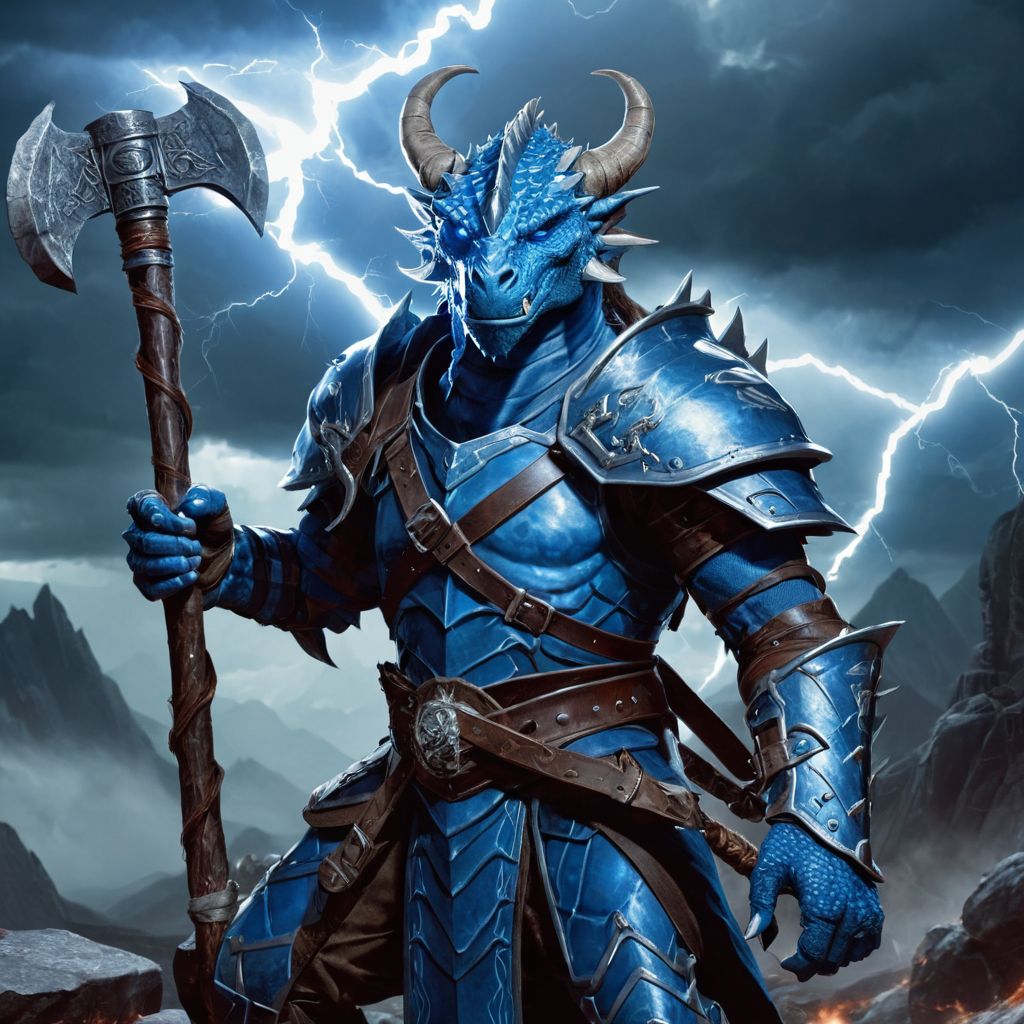
"Greetings and well met," said the dragonborn, his scales the color of dark blue skies before a thunderstorm. "I am Zarok Stormscale, axebearer and seeker of tales. I have walked realms where gods slumber and stars weep. But your song — it spoke of kinship, not conquest!"

Dustin's heart swelled. "Your bravery and valor inspire us all. It's an honor to meet one such as you."

The old woman studied Zarok with fascination. "Your complexion, your posture, your colours — a fascinating portrait. Well met, Zarok."

"Well met, old woman," Zarok replied, though he was confused by a certain... manly smell coming off this woman. "What's the purpose of this gathering?"

"Are you going to the festival?"

"Why yes, my boy," she said. "I wouldn't miss it for anything. The beautiful faces — I can't wait."

ZarokChronicleLeaving the Caravan

The sun dipped low on the horizon, casting long shadows across the dusty Black Road. Zarok trudged alongside the merchant caravan, guarding the merchants' goods. The monotony weighed heavily on him. He longed for adventure and a purpose beyond counting crates and fending off bandits.

It had been a long journey — back and forth along the Black Road, from the desert of Anauroch where he joined the caravan, to places like Llorkh and Loudwater and eventually to the Sword Coast.

As they approached Daggerford, he noticed colorful posters plastered on walls. They depicted a grand festival in honor of Lady Velrosa Nandar in Nightstone. The words caught his reptilian eyes immediately: "Seeking strong men to keep peace during Nightstone Festival."

Zarok's heart quickened. He envisioned himself standing tall in the town square, a guardian among revelers. It was a chance to prove himself, to find meaning beyond the mundane, to find again the honour he sometimes felt he'd left behind by leaving his clan.

That evening, he shared his thoughts with Garven, the grizzled caravan leader. Garven tried to convince Zarok to stay, feeling safe in the presence of this mighty wielder of battle axe. But to no avail — Zarok's mind was made up, and Garven knew that trying to change that was impossible.

And so Zarok found himself on the trail to Nightstone, using the cover of night and avoiding the eyes of men not used to seeing dragonborn. Until he heard the chatter and music drifting from a campfire by the road.

Songs by Firelight

With the full company assembled — three old friends, two wizards, a mysterious old woman, and a dragonborn drawn from the shadows by song — Dustin felt something stir. Not just the warmth of the fire, but a sense that something was beginning. Something worth recording.

"Since we all seem to be heading in the same direction," Dustin said, "I suggest we set up camp for the night together. If anybody is up for it, I will play one last song."

"Play your tune, o bard, let your music resound," Zarok said. "Maybe my scales shall join, in harmony's line — a baseline strong, in this song of thine."

And he did. Dustin played "Battle for the Silver Marches" — a song about the recent troubles in his homeland, one that meant much to him. As he played, Zarok's scales hummed along, a deep rich tone that added a dimension Dustin had never heard before. It was wonderful. It was powerful.

05 Battle for the Silver Marches 3:30

"Thanks, Zarok," Dustin said quietly when the last note faded. "That was wonderful. Very powerful. The song is about the recent troubles in my homeland, and means much to me. You gave it another dimension."

Zarok nodded. "I like to think I did."

"I like to sing songs about the deeds of the mighty," Dustin added, "and this was a mighty performance, my new friend."

Then Dustin stared into empty space for a moment — as if listening to something no one else could hear. A slightly troubled look crossed his face. "Ok," he said. "I will play one last song. One that is a different mood, though. Then I will roll out my bedroll and retire."

The fire popped and crackled. The others listened as Dustin's music turned darker, more melancholic — a lament for someone lost, a friend who would never come home.

06 Jorlan's Demise 2:50

No one spoke when the song ended. One by one, they found their bedrolls, the fire burning low.

Dustin was half asleep when the storm rolled in. It came from the east — from the direction of Nightstone — a wall of black cloud lit from within by lightning that split the sky in jagged white lines. The thunder followed seconds later, deep and rolling, shaking the ground beneath them. Rain hammered the canopy above, and the fire hissed and spat.

Most of them pulled their cloaks over their heads and endured it. But Mindartis sat up. The elf's eyes — sharper than any human's, even in the dark — were fixed on the eastern horizon, where the lightning was brightest.

He said nothing that night.

In the morning, the old woman was gone. Bedroll empty, bag vanished, no footprints leading away from camp. As if she had never been there at all. Nobody could explain it, and after a brief search of the surrounding trees turned up nothing, they let it go. Perhaps she'd risen early and walked ahead. Perhaps she'd changed her mind about Nightstone. Strange, but nothing to dwell on.

It was only as they packed up the camp and turned east toward Nightstone that Mindartis mentioned what he had seen — carefully, almost reluctantly, as if unsure whether to trust his own senses.

"I saw something last night," Mindartis said. "During the storm. When the lightning lit up the sky." He paused. "A shape. Above the clouds. Stone towers. Battlements." Another pause, longer this time. "A castle. Floating."

The others looked at him.

"You're sure?" Dustin asked.

Mindartis shook his head slowly. "No," he said. "I am not sure at all. It was dark, and the storm was violent, and the mind sees what it wants to see in lightning." He picked up his pack and started walking. "But I know what I saw."

Nobody knew what to make of it. They filed it away as one of those things — a traveller's tale, a trick of the light, the kind of story that sounded better after a few drinks.

They would learn otherwise soon enough.

Chapter 2 — Nightstone

Between Worlds

Stone and silence where a festival should have been. Goblins in the streets, worgs at the gate, and beyond the veil — a tome that should not be read.

Arrival at Nightstone

They smelled it before they saw it — smoke, faint but unmistakable, carried on the morning breeze. As the road crested a gentle hill, Nightstone came into view below them, and the group fell silent.

This was not the festival they had come for.

The village sat in a shallow valley, surrounded by a wooden palisade. Even from a distance, they could see the damage. Rooftops caved in. Walls crumbled. Massive boulders — far too large for any catapult — lay scattered among the buildings like a giant's dice, some half-buried in the ground, others having punched clean through houses and market stalls. The keep on the hill beyond the moat had taken the worst of it. A boulder the size of a cottage had struck the tower, shearing off the upper floors and leaving the rest leaning at a sickening angle. Whatever authority had governed this place, it was in ruins.

And yet — the church bell was ringing. A steady, rhythmic toll, echoing across the valley. Not a call to worship or celebration. Something else.

"That is not a festival bell," Mindartis said quietly.

But it was Mindartis who noticed something else — something that troubled him more than the destruction. He had visited Nightstone years ago, when Lady Velrosa had hosted a diplomatic gathering. He remembered the village square, and at its center, the settlement's namesake: a tall, dark obelisk of obsidian-like stone, ancient and mysterious, around which the village had been built. The Nightstone itself.

It was gone. Where the obelisk had stood, there was nothing but a gaping hole in the earth.

"The Nightstone," Mindartis murmured. "It's been taken."

The drawbridge was down. The moat beneath it was still and grey. No guards. No voices. No festival banners. Just the relentless tolling of the bell and the low creak of damaged timber in the wind.

They crossed the drawbridge in single file, weapons drawn.

ArchibaldCampaign ProgressAbsent: Nightstone

Archibald was not present for the goblin and worg fighting in Nightstone. He had wandered off to examine one of the crushed buildings at the edge of the village, having identified what he believed to be an unusual mineral composition in the boulders used to destroy it — the kind of observation that seemed, to Archibald, far more pressing than whatever the others were doing with all the snarling.

The Bell in the Church

The village was a graveyard of stone and silence — except for that bell.

They moved through the streets carefully, stepping over rubble and around craters where boulders had landed. Houses stood open like broken teeth, their contents spilling into the road. Vegetables rotted on an overturned market cart. A dog's leash was still tied to a post outside a shattered home, the dog nowhere to be seen. Whoever had lived here had fled — or been taken.

The bell kept ringing.

It led them to the temple at the village square — a modest wooden building, one of the few structures still mostly intact. The heavy wooden doors were ajar. Inside, in the dim light filtering through cracked stained glass, they found the source of the noise.

A goblin. Alone, standing on a crate, pulling the bell rope with both hands in a steady rhythm. It hadn't noticed them yet.

Kürbis moved first. Before the goblin could so much as squeak, the goliath had it by the scruff of its neck, lifting it clean off the crate. The creature's legs kicked uselessly in the air, its yellow eyes wide with terror.

"Keep the bell going," Don Juan whispered sharply.

Mindartis understood immediately. If the bell stopped, whoever — or whatever — had set this goblin to the task would know something was wrong. With a subtle gesture, he conjured an invisible Mage Hand and set it to pulling the rope in the same steady rhythm. The bell continued to toll as if nothing had changed.

The goblin squirmed and gibbered. They set it down — Kürbis's massive hand still clamped on its shoulder — and tried to get answers.

"Who sent you here? What happened to the village?"

The goblin was eager to talk, which was the problem. It talked endlessly, breathlessly, in broken Common peppered with Goblin — about its chief, about the big rocks falling from the sky, about how the "big-big ones" came and the humans ran, about how the chief said to ring the bell and so it rang the bell. It gestured wildly. It contradicted itself twice in the same sentence. It offered to show them where the treasure was (there was no treasure). It promised its chief would reward them (its chief would not reward them).

"Goblins," Mindartis sighed.

They got very little of use from the interrogation. The goblins had moved in after the attack, scavenging what was left. There were more of them — and worgs, the goblin added almost as an afterthought, as if the giant wolves were a minor detail.

The Ambush That Wasn't

The party decided to use the temple as a trap. If the goblins were scattered through the village, the bell was their signal — stop it, and they'd come to investigate. Better to fight them on their own terms, in a defensible position, than be caught in the open streets.

They prepared. Positions were taken behind benches and pillars. The goblin was tied up and gagged in a corner, making muffled sounds of protest. When everything was ready, Mindartis dismissed the Mage Hand.

The bell stopped.

For a long moment, nothing happened. The silence after so much ringing was almost worse — heavy and expectant. Then, from somewhere outside, voices. High-pitched, chattering. Goblin voices, growing closer.

A few came to investigate, creeping toward the temple doors with crude weapons drawn. The ambush worked — partially. The first goblins through the door were dropped quickly. But goblins are not brave creatures, and the survivors scattered back into the streets, shrieking warnings.

The element of surprise was spent. The party would have to go to them.

Worgs in the Streets

They emerged from the temple into chaos.

The worgs hit them before they'd made it twenty paces. Massive, dark-furred wolves — not natural beasts, but intelligent, cruel predators, each one large enough to carry a goblin rider. They came bounding from between the ruined buildings, snarling, coordinated, far more dangerous than the goblins they served.

The fight was ugly.

Don Juan met the first worg head-on, his blade flashing. Kürbis roared and charged into a pair of them, scattering goblins like leaves. Mindartis fell back, spells crackling from his hands. Dustin did what he could — a word of encouragement here, a chord of Bardic Inspiration there, his flute useless when both hands needed to be free for the chaos unfolding around him.

But it was Zarok who bore the worst of it. A worg blindsided the dragonborn, its jaws clamping down on his shoulder and dragging him to the ground. For a terrible moment, the paladin disappeared beneath a pile of snarling fur and snapping teeth. By the time Kürbis hauled the beast off him, Zarok was bloodied and barely standing, his armor torn, one arm hanging limp.

They won. They always win — that's what you tell yourself afterward, when you're sitting in the dirt trying to stop the bleeding. But it was close. Closer than any of them would have liked for their first real fight together.

Zarok, propped against a wall while Don Juan tended to his wounds, looked up at the others with something between exhaustion and wonder.

"What a strange day it was," he said. "That worg had me good."

The Changeling

They were catching their breath when she appeared — stepping out from behind a collapsed wall with the casual ease of someone who had been watching the whole time.

It was the old woman. Except it wasn't.

As she walked toward them, her features shifted. The wrinkles smoothed. The stooped posture straightened. The grey hair shortened and changed colour. It was like watching a reflection settle in disturbed water — the image rippling, reforming, becoming something else entirely.

Where the old woman had been stood a slight, sharp-eyed figure with pale skin and an expression that suggested she found most things faintly amusing.

"Gri," she said. "My name is Gri."

The party stared. Kürbis's hand tightened on his greatsword. Don Juan's mouth opened, closed, and opened again.

"The old woman," Dustin said. "On the road. That was you."

"That was me."

"You were watching us?"

"I was deciding," Gri said. "Whether you were worth travelling with." She looked at the dead worgs, the scattered goblins, the general carnage of the last half hour. "You'll do."

A changeling. Dustin had heard of them — shapeshifters who could wear any face, slip into any crowd, become anyone they needed to be. He'd never met one. Or perhaps he had, and simply hadn't known it.

"I can help search the village," Gri said. "If you'll have me."

Don Juan looked at Dustin. Dustin looked at Kürbis. Kürbis shrugged — which, from a goliath, was a gesture roughly equivalent to a small earthquake.

"Welcome to the group," Dustin said.

The Windmill

With the worgs dead and the goblins scattered, the party swept through what remained of the village. Most of the buildings were empty — doors hanging open, belongings strewn across floors, the signs of a hasty evacuation. The boulders had done their work. Some houses were simply gone, reduced to piles of timber and stone with a massive rock sitting in the middle like a grotesque headstone.

It was while searching one of the damaged homes that Dustin found something that gave him pause. The house was different from the others — herbs hung from the rafters in bundles too deliberate to be decorative, strange symbols were scratched into the doorframe, and the air inside carried a sour, musky tang that no amount of boulder damage could explain. This had been a hag's dwelling. Or something close to it.

On a shelf, half-buried under fallen plaster, sat a dark gemstone — deep red, almost black, smooth as polished bone and warm to the touch. A bloodstone. Dustin knew enough about the arcane to know he should leave it where it was. Hag stones carried intentions. They didn't end up on shelves by accident.

He put it in his pocket anyway.

He told himself it was curiosity. A bard's instinct to collect the interesting, the unusual, the storied. But as his fingers closed around the stone and its warmth spread through his palm, a small voice in the back of his mind whispered that curiosity had nothing to do with it.

The windmill at the edge of the village was another matter. It still stood, its sails broken but its walls intact, and from inside came the unmistakable sounds of goblins — chittering, arguing, the clatter of things being knocked over and rummaged through. A barricade of furniture and crates had been shoved against the door from the inside.

The goblins had found themselves a fortress. A poor one, but they didn't seem to know that.

Kürbis solved the problem with his usual elegance. One shoulder charge splintered the barricade and sent goblins tumbling. What followed was brief, loud, and decisive. The goblins inside fought with the desperation of cornered rats, but they were outmatched in every way that mattered. Within minutes, the windmill was cleared.

They found food stores — most of it looted from village homes — and a few trinkets the goblins had hoarded. Nothing of value. Just the sad evidence of a village picked clean by scavengers.

The Inn

It was Gri who found her.

The changeling had slipped away during the windmill assault — as Gri often did — to scout the remaining buildings. When the others caught up, they found Gri standing in the doorway of the Nightstone Inn, gesturing them inside with a finger to her lips.

A woman sat at one of the tables, tense, watchful, a crossbow within arm's reach. She was human, dark-haired, dressed in practical leather — not a villager, that much was obvious. She'd been here through the attack, she said. Trapped when the rocks started falling, hiding while the goblins moved in. She seemed relieved to see armed company, though her eyes moved a little too quickly, taking in their weapons, their numbers, their positioning.

She gave her name. She was grateful. She was helpful, pointing out which buildings had been searched and which hadn't. She was, in fact, a little too polished for someone who had just survived the destruction of a village.

Don Juan noticed it first — a certain practised ease in the way she handled herself, the way her story came out just a touch too smoothly. He filed it away and said nothing. There were more pressing matters.

The Grey Mist

It happened without warning.

One moment, Dustin was standing in the village square, looking at the hole where the Nightstone had been. The next, the world shifted. The colors bled out of everything — the sky, the buildings, his companions — as if someone had drained the light itself. A grey fog rolled in from nowhere, thick and cold, muffling all sound. The church bell, still tolling under Mindartis's spell, faded to a distant, ghostly echo.

Dustin looked down. His hands were translucent.

He spun around. Kürbis was beside him, looking equally confused, his massive form flickering like a candle in the wind. Around them, the village was still there — but wrong. Washed out. Insubstantial. Their companions moved through the square like shadows, oblivious.

"Kürbis," Dustin said. His voice sounded strange — thin, distant, as if coming from far away. "Can you hear me?"

"I hear you," the goliath rumbled. "But I don't think they can hear us."

Dustin's hand went to his pocket — to the bloodstone. It had been warm since he'd taken it from the hag's house. Now his fingers closed on nothing. He looked down and saw it — the gem, tumbling through his translucent hand and falling to the ground. Except it didn't fall to his ground. It fell to the other one. The real one.

On the material plane, Archibald blinked. A small gemstone had appeared at his feet, seemingly out of thin air. He picked it up, squinting at it.

Dustin watched, helpless, as the old wizard pocketed his bloodstone. He understood now. The gem wasn't ethereal. He was.

Whether the bloodstone had caused this or merely been the first thing to slip through, Dustin couldn't say. But the timing felt like more than coincidence. He thought of the hag's shelf, the warmth in his palm, the whisper that told him to take it.

They were trapped in the Ethereal Plane — able to see the material world as a grey, muted shadow, but unable to touch it, unable to be heard, unable to do anything but watch.

DustinBackstoryThe Tome

Aric carried an old leather-bound tome he had taken from the yak folk — dense, angular script in a language he couldn’t read. It became an obsession. Every night before sleep, the tome came out. He cast Comprehend Languages on it countless times over the years. The spell never took hold. The tome resisted, as if its secrets were protected by magic older than the spell trying to pierce them.

Years of study yielded only fragments. Rituals of devotion and sacrifice. A Forgotten God — the same deity the yak folk worshipped. A connection between this god and the elemental planes. The words spoke of blood and flesh offered in twisted rites.

The horror of what he read should have driven him away. Instead, it pulled him deeper. The tome became a nightly companion, its pages an itch he could not stop scratching. He told himself he was looking for answers — for his village, for the revenge he had sworn. But somewhere beneath the rationalisation, a darker curiosity was taking root.

The Tome

Time moved strangely in the Ethereal Plane. After the grey mist settled and the reality of their situation sank in, a restless quiet took hold. There was nothing to do. Nothing he could do. His companions moved through the village like shadows in a lantern show, tending wounds, searching buildings, living a story he could only observe.

Kürbis handled it better. The goliath found a spot, sat down, and waited with the patience of someone who had spent years alone in the wilderness. Waiting was something Kürbis knew how to do.

Dustin did not.

He wandered the ethereal echo of Nightstone for a while, testing the boundaries of this half-world. He could pass through walls. He could stand in the middle of a conversation and hear nothing but murmurs. He could wave his arms in front of Zarok's face and the dragonborn wouldn't so much as blink.

Eventually, he found a quiet spot — a corner of the ruined inn that still had most of its roof — and sat down. He reached into his pack and pulled out the tome.

He'd been carrying it since the yak folk. An ancient leather-bound book, heavy for its size, its cover embossed with symbols he couldn't read. He'd taken it from their hoard when Kürbis had helped him escape — grabbed it on instinct, the way a bard grabs anything that looks like it might contain a story. He'd tried to read it many times since — cast Comprehend Languages on it more than once, hoping to crack its secrets. But the spell had never taken hold. The script remained stubbornly indecipherable, as if the tome itself resisted being understood. Dense, angular, old. Not Elvish, not Dwarvish, not any language he recognized. Protected, perhaps, by layers of magic older than the spell trying to pierce them.

But here, in the grey stillness of the Ethereal Plane, with nothing else to do and nowhere else to go, Dustin had time. The tome felt strangely heavy and cold in this place, as if it carried the weight of the dark secrets it held. He sat cross-legged, laid it across his knees, and began the ritual one more time — expecting nothing.

Comprehend Languages.

The familiar sensation of understanding washed over him — but this time, it was different. The spell had a different quality here, as if the Ethereal Plane itself was thinning the barriers between things. Between worlds. Between languages. Between what was meant to be known and what was meant to stay hidden.

The angular script shimmered and resolved. Slowly, impossibly, words formed — not in any tongue he knew, but in meaning, pouring directly into his mind. Much of it still remained obscured by protective magic too deep even for this place to strip away. But what he could read made his blood run cold.

The tome described connections to the elemental planes — pathways of power that could be forged between a mortal soul and the vast, ancient forces that shaped the world. Earth. Fire. Water. Air. And deeper still — the para-elemental planes, the quasi-elemental fringes, the spaces between spaces where genies dwelt and bargains were struck.

It was dark scripture. Devotion to a forgotten deity — or perhaps not a deity at all, but something older, something that predated the gods' claim on worship. It promised power in exchange for loyalty. Strength for sacrifice. Knowledge for surrender.

Dustin knew he should stop reading.

He turned the page.

The deeper he went, the more the tome seemed to respond to his attention. Passages that had been faded became clear. Illustrations that had seemed abstract resolved into diagrams — rituals, gestures, words of binding. Some sections were incomplete, their pages torn or deliberately obscured, and these gaps tormented him most of all. What was missing? What had someone tried to hide?

He read until his eyes ached. He read until the ethereal mist seemed to pulse in time with the words. He read until the boundary between understanding and obsession blurred beyond recognition.

The path ahead was fraught with danger and moral peril, but he was resolute.

When he finally closed the tome, his hands were shaking. Not from fear — or not entirely from fear. From excitement. From hunger. From the terrible certainty that this book held the key to something he had been searching for without knowing it.

He put it back in his pack and told himself he was done with it.

He was not done with it.

Alone

Kürbis was fading.

Dustin found the goliath near the village gate, his outline shimmering like heat haze over a summer road. The grey of the Ethereal Plane was loosening its grip on him, and something on the other side was pulling him back.

"Kürbis, wait—"

But the goliath was already dissolving. His features thinned into the mist, the massive silhouette becoming transparent, and then—

Gone.

On the material plane, Kürbis reappeared among the others, solid again, confused but present. Dustin could see it — faintly, through the veil. Someone clapped the goliath on the back. Life went on without him.

"Wait! Don't leave me here!"

No one heard.

He was truly alone. Even Jorlan's spectral presence — the ghost of his childhood friend that sometimes lingered at the edge of Dustin's awareness, a remnant of debts unpaid — was absent here. Whatever this place was, it was emptier than anywhere Dustin had ever been.

He wandered. He called out. He tried every trick he knew — spells, songs, sheer force of will — to push through the veil. Nothing worked.

It was hours — or what felt like hours — before he heard the snoring.

He followed the sound to a corner of the Nightstone Inn, where a familiar figure lay sprawled across a spectral bed, sound asleep and very much ethereal. Small, luminous orbs drifted lazily around him — memory spheres, the old wizard's method of storing experiences he couldn't trust his own mind to hold.

"Archibald?"

The wizard snorted awake, blinking in confusion. "Hmm? What? Who's there? Where am I?"

"Archibald, we're in the Ethereal Plane. Do you know how to get us back?"

The wizard squinted at him. Then at the grey mist. Then at his own translucent hands.

"Ah," he said. "Well. That would explain the décor."

One of the memory spheres drifted between them, pulsing with light. Inside it, images swirled — fragments of the day Archibald had recorded before slipping into the Ethereal Plane himself.

"You might want to see this," Archibald said, tapping the sphere.

The sphere bloomed open, and Dustin saw Nightstone through Archibald's eyes.

A massive hill giant lumbering toward the village, uprooting trees and hurling them at the walls. "Are these tree trunks he's throwing?!" — someone's voice, pitched high with disbelief. Mindartis and Gri at the gate, attempting to talk the brute down. The giant, uninterested in diplomacy, slumping against the windmill and falling asleep. Gri creeping forward — "Let's steal his bag while he sleeps." The giant waking, flailing with pieces of the windmill. Arrows sinking into its hide. Someone striking its knee with a quarterstaff. And then Gri, arrow nocked, waiting for the opening — "I stab her in the throat" — and the giant fell.

Then riders arriving at the gate. A flying snake, of all things.

The sphere dimmed. Dustin stared at Archibald.

"You missed quite a day," the wizard said.

DustinThoughtsThe Ethereal Plane (a note from the table)

Not every adventurer can make it to every session. When a player can't join, their character slips into the Ethereal Plane — a grey, muted echo of the world where they can observe but not interact. There's no deep lore behind it and no quest to escape. It's simply how our table handles absences without breaking the story. When the player returns, so does their character, stepping back through the veil as if waking from a strange dream. The bloodstone that Dustin found in the hag's house serves as the in-world anchor for these transitions — a convenient bit of magic that none of the characters fully understand, and none of the players need to.

The Caves

The villagers of Nightstone hadn't all perished. Many had fled when the boulders began to fall, taking shelter in a network of caves in the hills north of the village. The party found them there — frightened, hungry, but alive.

Getting them out was another matter entirely. The caves had dangers of their own, and the villagers weren't the only things hiding in the dark.

This section is incomplete — to be expanded.

The Nobles of Nightstone

With the village secured and its people returned from the caves, there was the matter of what came next. Lady Velrosa Nandar was dead — crushed in the initial bombardment, they were told, when a boulder struck the keep.

Her daughter, Daphne, had survived. She met them in what remained of the keep's great hall — a young woman standing in the shadow of a ruined throne, trying very hard to look like she belonged there. She did not yet look like she belonged there, and she knew it.

"My mother spoke of Urgala Meltimer," Daphne said. "In Triboar. She was my mother's mentor — a retired adventurer, runs an inn called the Northshield House. If anyone can advise me on what to do next, it's her." She hesitated. "I'm not asking you to fight my battles. I'm asking you to carry a message. Tell Urgala what happened here. Tell her I need help."

She paused, and for a moment the mask of composure slipped. She was young, grieving, and the weight of an entire village had just landed on her shoulders.

"I don't know how to do this," she said quietly. "Any of it."

Don Juan, who understood duty thrust upon the unwilling better than most, placed a hand on her shoulder. "You don't have to know yet. That's what mentors are for."

The party accepted. Triboar was to the west — a few days' ride along the trade roads. They would find Urgala, deliver the message, and see what came of it.

What a Band

That evening, Zarok sat sharpening his axe by a low fire. His shoulder still ached from the worg's jaws. He looked up at the others — the bard tuning his flute, the goliath stoking the flames, the paladin polishing his blade, the wizards bickering about something arcane — and shook his head slowly.

"What a strange day it was," he said to no one in particular. "That worg had me good! But what a band of skilled adventurers I seem to have joined."

He didn't regret leaving the caravans. Not for a moment.

And Dustin — back from the Ethereal Plane at last, though he wouldn't say how, and quieter than usual — sat apart from the group and wrote in his journal by candlelight. He'd come to Nightstone expecting a festival. Instead there had been rubble and goblins and worgs and a hill giant and a grey void where time stood still.

And yet.

This felt so right.

He'd come to play music at a party. He was leaving with something better — a company of fighters, scholars, and misfits who had bled together and come out the other side. He'd dreamed of becoming a bard of the College of Valor, recording tales of heroic deeds. Now he was living one.

He closed the journal, looked up at the stars, and smiled.

At dawn, the village guard provided them with horses. Daphne Nandar watched from the ruined gate as they mounted up and turned west toward the trade roads. She raised a hand — not quite a wave, not quite a salute. Something in between.

At the crossroads where the Trade Way split toward Nightstone, Gri stopped her horse.

The changeling sat in the saddle for a moment, looking north up the Trade Way, then back at the rest of them. Her expression could have been amusement or indifference or something else entirely — with Gri, it was never easy to tell.

"I'm not much for delivering messages," she said. "Triboar holds nothing I'm looking for."

No explanation. No apology. Just the flat certainty of someone who had been making her own decisions for a long time and saw no reason to justify this one.

Dustin nodded. He hadn't known her long — none of them had, not really, not even counting that one night on the Trade Way when she had been someone else entirely. But she had fought beside them in Nightstone, and that counted for something.

"Take care of yourself, Gri."

She smiled — or something close to it — turned her horse south, and rode off without looking back.

The rest of them continued west. They had a message to deliver.

Chapter 3 — The Tower in the Sky

Up in the Clouds

A staircase of cloud, a shy keeper of forgotten lore, and a song that stirs something ancient.

The Cloud on the Road

The horses were a parting gift from the castle — fine animals, strong and well-fed, the kind of mounts that spoke of gratitude without needing words. The party had saved Nightstone. They had driven out the goblins, cleared the caves, brought the villagers home. No expenses were spared.

But Nightstone still needed help. Lady Nandar was dead, and her heir was young — too young to govern a village still pulling itself from the rubble. The party had been asked to ride west to Triboar and deliver a message to Urgala Meltimer — a retired adventurer who ran an inn there called the Northshield House, and the only person Daphne Nandar could think of who might know what to do.

The road wound through low hills and sparse woodland, the horses settling into an easy rhythm against the packed earth. The party rode in a loose column — rested, at least, if not entirely at ease. The memory of Nightstone sat heavy on all of them.

It was Mindartis who spotted it first. A shape on the horizon that didn't belong — too tall, too vertical, too still against the moving clouds. As they drew closer, the shape resolved into a tower. Not built on any hill or cliff face, but standing on a cloud, a thousand feet above the road. As if it had always been there, trailing wisps of white mist from its base like smoke from an extinguished candle.

From the middle of the road underneath, a staircase of impossible design spiralled upward. The steps were broad — far too broad for human feet — and made of something that looked like compacted cloud, solid enough to hold weight but faintly luminous, shifting at the edges like fog that had forgotten how to drift.

"Well," Don Juan said, hand resting on his sword. "That is either a very large problem or a very large opportunity."

Kürbis was already climbing.

The tower was empty — or appeared to be. The party emerged into an enormous circular chamber, its walls lined with shelves that reached beyond sight, the ceiling lost somewhere in the mist above. Furniture built for someone three times their height stood in careful arrangement — a desk the size of a wagon, a chair that could seat the entire party. Wind moved through the space in soft currents, carrying the faint scent of old paper and mountain air.

But no giant.

"Hello?" Dustin called, his voice swallowed by the vast space. "We come in peace. Mostly."

Silence. Then — a shuffling. A creak of wood. The faintest tremor in the floor.

"Who... who is there?" The voice came from somewhere behind the bookshelves — deep as distant thunder, but thin with nerves. "Are you... are you small folk?"

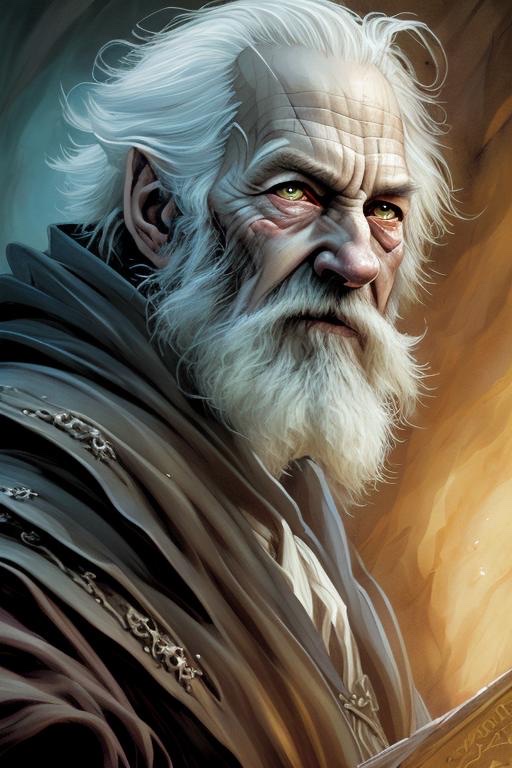
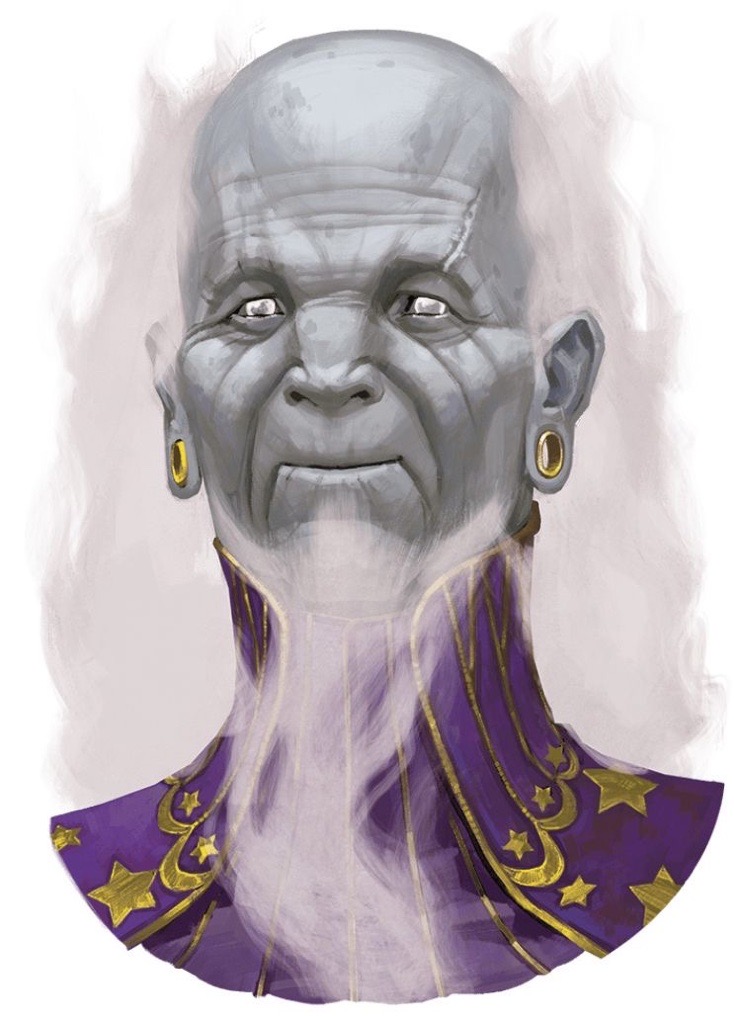
It took some coaxing. Gentle words. Assurances that they were not here to steal, fight, or cause trouble. Slowly, with the hesitance of a creature utterly unused to company, a cloud giant emerged from behind a towering bookcase. He was enormous, even by giant standards, with a long, wispy white beard and eyes that darted between them with the anxious energy of a scholar interrupted mid-thought.

Zephyros
Zephyros

Zephyros. He introduced himself in a voice that couldn't quite decide between curiosity and alarm.

He had seen what happened at Nightstone. From his tower, drifting among the clouds, he had observed the boulders fall and the village crumble and the small folk scramble to survive. He knew about the giants — knew more than any of them could guess — and he was troubled by what he'd seen.

"The Ordning is broken," he said, as if that explained everything. When their blank faces told him it did not, he elaborated — slowly, patiently, warming to his subject the way shy people do when they find the one thing they can talk about without self-consciousness.

The Ordning was the ancient caste system that governed all giantkind — the hierarchy decreed by Annam the All-Father that determined every giant's place in the world. Storm giants at the top. Hill giants at the bottom. And now it was shattered, and every giant race was scrambling to prove their worth, to rise in a new order that hadn't been established yet. That was why boulders had fallen on Nightstone. That was why the roads were no longer safe.

Zephyros was heading west. He offered them passage — tentatively, as if half-expecting them to refuse — and his tower could carry them far faster than their horses, and the road ahead was long and dangerous.

They accepted. It would have been foolish not to.

MindartisCampaign ProgressAbsent: The Tower

Mindartis remained in Nightstone while the others climbed. With Lady Nandar dead and her daughter newly installed in a ruined keep, the village had need of someone who understood politics and logistics — and Mindartis had contacts here, old connections from the diplomatic work that had brought him to Nightstone years before. He stayed to help coordinate the recovery effort.

ZarokCampaign ProgressAbsent: The Tower

Zarok did not make the climb with the others. The worg fight in Nightstone had left its mark — his shoulder had taken the worst of it, and with the village still in disarray and Daphne Nandar barely old enough to manage the keep, he stayed behind to help oversee the recovery and see the villagers safely home from the caves.

The Griffons

The tower was larger inside than it appeared from below — or perhaps it simply felt that way, built as it was for a creature three times their height. The ceilings soared. The furniture was enormous. A chair was the size of a small room. But there were corners that felt almost cozy, scaled-down alcoves where the party could sleep and eat without feeling like mice in a cathedral.

And then there were the griffons.

Zephyros kept a clutch of four in a roost at the very top of the tower — an open-air platform exposed to the wind and sky, half nest and half landing pad. Magnificent creatures with the bodies of lions and the heads and wings of eagles, their feathers a deep tawny gold that caught the light whenever the clouds parted. They were half-wild, territorial, and utterly uninterested in being approached by anything smaller than their keeper.

Most of the party learned this quickly. Don Juan attempted charm and received a wing buffet for his trouble. Mindartis observed from a safe distance, making notes. Archibald fell asleep in a chair and missed them entirely.

Kürbis, however, was transfixed.

The goliath stood at the edge of the griffons' perch for what felt like an hour, perfectly still, watching them preen and stretch and fold their wings. He didn't approach. Didn't speak. Just waited, with the same infinite patience he'd shown in the Ethereal Plane, the same stillness that came from years alone in the mountains where the only way to see a wild thing was to become part of the landscape.

Eventually, one of the griffons turned its head. Studied him. Took a step forward.

Kürbis extended a hand — palm up, fingers loose — and waited.

The griffon pressed its beak into his palm and held it there. A low rumble, almost like a purr, vibrated through its chest.

"Of course," Dustin muttered from a safe distance. "Of course the mountain man tames the griffon."

Kürbis said nothing. He was smiling — a rare, unguarded thing — and scratching the griffon behind the ear as if he'd been doing it his whole life.

The Age of Ostoria

The first evening in the tower, with the clouds turning gold beneath them and the wind humming through Zephyros's walls, Dustin reached for his flute.

It was instinct. A giant's tower, drifting among the clouds — if there was ever a moment for a song about giants, this was it. And he had one. An old ballad he'd picked up years ago in the Silver Marches, passed from bard to bard around campfires the way these things always were — half history, half legend, more melody than accuracy. The Age of Ostoria. It told of the ancient giant empire in broad, romantic strokes — mountains that soared, heroes that fought, glory proclaimed. The kind of song that sounded impressive and said very little.

He coughed to get the group's attention. "This is the song I've heard around campfires," he said. "Or how I remember it."

07 The Age of Ostoria 2:30

He played it through. The others listened — Kürbis nodding along, Don Juan tapping a rhythm on his knee, Archibald humming faintly in his sleep.

It was a good song. A crowd-pleaser.

But when Dustin looked up at Zephyros, the cloud giant's expression was polite. Kind, even. And entirely unconvinced.

He didn't say anything. He didn't need to. Dustin could read an audience, and this audience — the only one in the room who had lived through the ages the song described — was being generous.

The song was a sketch. And Dustin had just performed it for someone who had seen the painting.

The Library

"Zephyros," Dustin said the next morning, trying to sound casual and failing entirely, "do you have any books about giant history? The real history — not the campfire version."

The cloud giant brightened. It was the most animated they'd seen him — eyes widening, hands clasping together, the nervous energy redirected into something almost resembling excitement. Of course he had books. He had many books.

The problem was scale.

Zephyros's library was built for Zephyros. The shelves rose to heights that made Dustin's neck ache from looking up, and the volumes themselves were enormous — leather-bound slabs the size of tabletops, too heavy for a half-elf to lift, let alone carry to a reading spot. Dustin tried once, gripping the spine of a promising-looking tome with both hands, and managed to slide it approximately two inches before his arms gave out.

"Perhaps," Zephyros said, with the careful diplomacy of someone trying not to embarrass a guest, "I could assist."

What followed was an arrangement that would have looked absurd to anyone watching. Zephyros, cross-legged on the floor to bring himself closer to Dustin's level, would carefully extract a volume from the shelf, lay it open on the ground, and turn the pages with a single enormous finger while Dustin sat on the edge of the book itself, reading with the help of Comprehend Languages and occasionally asking the giant to slow down.

Zephyros didn't mind. If anything, he seemed to enjoy it — the chance to share knowledge he'd spent centuries collecting, with someone who actually wanted to hear it.

And the history was staggering.

Ostoria — not the vague legend of the campfire songs, but the real empire. Annam the All-Father, who had created giantkind and divided the world among his sons. Vilmos, who claimed the seas. Nicias, the skies. Ruk, the hills. Ottar, the tundras. Masud, the volcanoes. Obadai, the caverns. And Lanaxis, the eldest, who ruled the plains from Voninheim. The Thousand Year War against dragonkind. The slow, inevitable decline. Cloud cities that floated among the stars. Storm fortresses where the ocean met the sky.

Dustin read for hours. He took notes on scraps of parchment, sketching lyrical fragments between passages about empires that had risen and fallen before the smaller races had learned to write. The campfire song he'd played the night before felt embarrassing now — a child's rhyme compared to the real thing.

On the second day, he asked a different question.

"Zephyros — do you have anything about yak folk? Or the elemental planes?"

The giant paused mid-page-turn. His eyes, usually scattered with nervous energy, focused on Dustin with an intensity that hadn't been there before.

"That is an unusual interest for a bard," he said.

Dustin shrugged. "I'm an unusual bard."

Zephyros studied him for a moment longer, then rose and moved to a different shelf — higher up, dustier, the kind of shelf where books were kept not for reference but for caution. He pulled down a smaller volume — smaller by giant standards, still the size of a shield — and set it before Dustin without opening it.

"Be careful with this one," he said. And the way he said it suggested he wasn't talking about the binding.

Dustin opened it anyway.

What he found was not what he had expected. The book spoke of the yak folk — the Yaksha, as they were properly called — and their ancient devotion to a Forgotten God, a being so old that even the giants had struck its name from their records. The Yaksha had enslaved other creatures to serve this deity, but chief among their tools were the Dao — earth genies of immense power, bound against their will and forced to toil in the deep places of the world. The Dao were creatures of stone and mineral, proud and ancient, and their enslavement was considered an abomination even by the standards of beings who measured history in millennia.

Dustin's hands trembled. The yak folk who had enslaved his village. The mines. The sacrifices to their Forgotten God. It was all here — not his story specifically, but the shape of it, the framework that explained what he had lived through without understanding.

And the tome he carried — the one he had stolen during his escape — suddenly made a different kind of sense.

That night, while the others slept, Dustin sat alone with the tome across his knees and read deeper than he had before. By dawn, something fundamental had changed.

DustinChronicleThe Pact

That night, while the others slept and the tower drifted through a sky of stars, Dustin sat alone with the tome across his knees. He had read it before — in the Ethereal Plane, where Comprehend Languages had finally pierced its outer layers. But now, armed with what Zephyros's books had taught him about the Yaksha and their enslaved Dao, the passages he'd struggled with before came into sharper focus. The elemental connections. The pathways between planes. The genies, bound and broken and waiting for someone to reach back.

He read deeper than he had before. And somewhere in the space between the words, something answered.

It came not as a voice but as a presence — a weight in the air, a vibration in the stone beneath him, a warmth that rose through the floor of the tower as if the earth itself had reached up through the clouds to find him. It was patient and ancient and vast, and it was interested.

Oliaa Hazrat.

The name formed in his mind like a stone settling into sand. A Dao. An earth genie — one of the enslaved, one of the bound, reaching through the cracks in the tome's protective magic to make contact with the mortal who had carried it all this way.

The offer was simple. Not spoken — felt. Power, in exchange for service. Strength drawn from the earth itself, channelled through a vessel. Not the tome — something smaller. Something Dustin already carried.

His hand went to his belt pouch. The tinderbox. An unremarkable thing — brass and flint, dented from years of travel. But when his fingers closed around it, he felt the metal hum. Warm. Alive.

He thought of Jorlan. The mines. The altar. The sound his friend had made when they dragged him away — not a scream, but a silence, the kind of silence that had lived inside Dustin ever since.

The Dao had been enslaved by the same masters. Bound by the same god. Broken in the same deep places where Jorlan had died.

He didn't hesitate.

When he finally looked up, the first grey light of dawn was seeping through the tower walls. The tinderbox sat in his palm, and something fundamental had changed. He could feel it — a connection, thin as spider silk but strong as stone, running from his chest down through the clouds and into the deep places of the world where the Dao dwelt.

He put the tome away. He tucked the tinderbox back into his pouch. He had made a vow, years ago, in a mountain mine that stank of blood and stone. Vengeance for Jorlan. Freedom for those still chained. And now, for the first time, he had an ally who wanted the same thing.

DustinBackstoryThe Yak Folk

When Aric was still young, a shadow fell over his village of Frostvale, driving its people from their homes and into the Ice Spire Mountains. There they found the yak folk — the Yaksha — a brutal race of mountain-dwelling slavers who worshipped a being they called the Forgotten God. The villagers were welcomed at first. Given food and shelter in a picturesque valley. On the second night, they were put in chains.

The mines were dark and the work was endless. Most villagers did not survive long. Aric and his best friend Jorlan planned an escape. It failed. Jorlan was taken to the altar of the Forgotten God — a deity so old the yak folk had struck its name from their own records — and sacrificed.

Aric watched. He could do nothing. The guilt of that failure — of leading Jorlan into a plan that cost him his life — would define him for years to come.

The Ode

The rewrite consumed him. For the next two days, Dustin worked feverishly — the history he'd read from Zephyros's books burning through him, demanding a song that matched its scale. The campfire ballad wouldn't do. He needed something grander. Something that did the story justice. He rewrote lyrics, scrapped them, rewrote them again. He restructured the melody from the ground up, weaving in the names he'd learned — Annam, Vilmos, Nicias, Lanaxis — giving each verse the weight of the empire it described.

08 Ode to the Giants 5:23

When he finally played it through, he knew it was better. Leagues better. But something nagged at him — a gap he couldn't quite close on his own.

"Don Juan," he said the next morning, "I need your help."

The paladin raised an eyebrow. Musical collaboration was not usually something Dustin asked for — the bard was protective of his craft, particular about his arrangements, the kind of artist who accepted compliments more easily than suggestions. But this was different.

"The history — it's too big for what I wrote. It needs more. A certain panache. A grandeur the giants invoke." He waved a hand vaguely. "You're generally better at these things. Can you give me a hand?"

Don Juan smiled. "I thought you would never ask."

And then Dustin turned to Kürbis.

"I saw you still carry your bagpipes," he said. "Do you feel like adding some dimension?"

The goliath considered this for approximately two seconds before retrieving the instrument from his pack. What followed was days of practice — Kürbis had played before, but fitting bagpipes into a song written for flute and voice required effort, timing, and a willingness to play the same passage over and over until the drone sat right beneath the melody instead of drowning it. A huge effort. But Kürbis was not a man who did things halfway.

09 Ode to the Giants (Don Juan Remix) ft. Kürbis Kohl 5:00

The final version — Don Juan's arrangements, Kürbis's bagpipes, Dustin's flute and vocals woven through the center — they performed for Zephyros on the fourth day.

The cloud giant listened in silence. His enormous hands rested on his knees. His eyes, usually darting and anxious, were still.

When the last note faded, Zephyros was quiet for a long moment.

"Ah, Dustin," he said. "It is as if Ostoria came alive again." He paused, and something shifted in his expression — surprise, perhaps, at his own emotion. "There's more to small folk than many giants would admit."

Don Juan nudged Dustin with his elbow. "This song we've crafted will surely be a hit!"

Dustin smiled, but said nothing.

Don JuanThoughtsA Maestro's Craft

¡Ay, caramba! This song we've crafted will surely be a hit! I can already see the joy it will bring to taverns far and wide, with people dancing and reveling to our tune. Dustin's mastery of music and his guidance have been invaluable, truly marking him as a maestro. And Kürbis's spirited performance on the bagpipes has taken our song to an entirely new level. Together, we've created something truly special.

DustinThoughtsThe Right Audience

Don Juan was right — the song was good. Better than good. But my mind was already turning it over, testing it against the world outside this tower. An ode to the glory of giants, performed in taverns full of people whose homes had been flattened by boulders from the sky. I could picture the silence. The cold stares. The half-eaten bread rolls thrown at my head. No — this one would have to wait. The right audience, the right moment. It would come. For now, the song existed, and that was enough.

ZarokThoughtsA Beacon in the Void

Trapped in the mists of the Ethereal Plane, Zarok felt an unfamiliar sensation ripple through his scales. The haunting melody of Dustin's song, echoing tales of ancient giants, reached him like a beacon in the void. Each note resonated with his very essence, vibrating through his scales and igniting a spark of hope. The song's powerful verses painted vivid images of towering giants and their legendary feats, providing Zarok with a sense of direction and purpose. In the midst of the endless expanse, Dustin's song became his guide, a comforting reminder that he was not alone and that his path, though shrouded in mystery, was still illuminated by the courage of those who came before. Yet, amidst the solace, a pang of longing struck Zarok's heart. He wished he knew more about what had befallen his trusted companions, their fates unknown and their absence a heavy burden on his soul.

Something Shifting

In the quiet hours after the performance, while the others slept and the tower drifted through a sky full of stars, Dustin sat alone with his flute and played.

Not the Ode. Something else. The same bones — the same melody, the same lyrics — but rearranged. He wasn't sure why. His fingers found patterns they hadn't been taught. The flute's tone took on a darker edge, and he leaned into it, adding celtic drum rhythms he'd never used before, a bass undertone that hummed beneath the melody like something breathing underground.

10 Ode to the Giants (Dustins Remix) 5:30

It was still the Ode. But it wasn't, quite. The warmth Don Juan had brought was gone, replaced by something rawer — heavier. Celtic drums and a whispering bass voice that seemed to come from somewhere deeper than his chest.

He played it through twice, made adjustments, played it again. It felt right in a way he couldn't articulate. Like scratching an itch he hadn't known was there.

He didn't think about why his music was changing. He didn't connect it to the tome, or to the Ethereal Plane, or to the words of binding he'd read in the grey stillness between worlds. He was a bard. Bards evolved. That was all.

He put down his flute, stretched, and went to sleep.

The tower drifted on.

MindartisCampaign ProgressBack with the Party

Mindartis arrived at the tower — composed, unhurried, as if the cloud castle drifting a thousand feet above the road were a perfectly ordinary place to hold a reunion.

ZarokCampaign ProgressBack with the Party

Zarok caught up with the party at the tower — arriving, as dragonborn often did, in time for the part where things became violent.

The Visitors

The griffons sensed it first.

A shadow passed over the tower — something large, something fast, cutting through the clouds with a sound like tearing silk. The griffons went rigid on their roost, feathers bristling, golden eyes tracking something the party couldn't see. Then they screamed — a piercing, keening cry that echoed down through the tower and brought everyone to their feet.

"What was that?" Don Juan had his sword drawn before the sound had finished.

Kürbis was already climbing to the roost, one hand on the griffon's neck, staring into the white expanse. Whatever it was, it was gone — swallowed by cloud, leaving only a fading sense of something vast and old moving through the sky above them.

They waited. Nothing returned.

But it wasn't the last interruption.

The following day, shapes appeared in the main hall — cloudy, indistinct, like figures seen through frosted glass. The party drew weapons. Zephyros raised a hand, but his expression was uncertain. The shapes drifted through the chamber, examining the bookshelves, the furniture, the walls — methodical, purposeful, utterly silent.

Then they solidified.

Dwarves. Four of them, armoured and wary, bearing the insignia of the Lords' Alliance. They had come to investigate the tower — a structure of unknown origin drifting across the Sword Coast was not the sort of thing that went unnoticed by those whose job it was to notice things. They had been carried here by a dragon — a silver, circling somewhere above the clouds, patient as only dragons could be.

The conversation was tense but civil. Zephyros explained himself — a scholar, a neutral party, troubled by the breaking of the Ordning and offering passage to small folk who had been caught in its consequences. The dwarves listened, asked pointed questions, received answers that satisfied them enough to leave without violence.

They dissolved back into cloud and were gone. The tower drifted on.

The Doom of the Desert

The storm came without warning.

One moment the sky was clear — the endless blue that had become their ceiling for the past days. The next, clouds boiled up from below like something rising from deep water, black and churning, shot through with veins of lightning that cracked and forked in silence before the thunder caught up, rolling through the tower hard enough to rattle the books on their shelves.

Zephyros stood at his window, and for the first time since they'd met him, the cloud giant looked afraid.

Two shapes burst through the wall.

Gargoyles — stone-skinned, bat-winged, their eyes burning with malice and purpose. They hit the floor already fighting, lashing out at anything within reach. The party scattered and regrouped. Don Juan's sword flashed. Kürbis roared and swung. Mindartis's arcane shields flickered to life. Archibald, startled awake from his latest nap, began hurling spells with the irritated precision of a man whose sleep had been interrupted one too many times.

The fight was brutal. Gargoyles were tough — tougher than anything they'd faced before. Stone skin turned blades. Wings battered shields. Every hit that landed felt like striking a wall.

Then the wall exploded.

Not the gargoyles' entrance — a different wall, higher up, where the stone was thickest. Something enormous hit it from the outside, and the masonry didn't crack so much as detonate, sending chunks of rock the size of barrels tumbling through the chamber. Wind screamed through the gap, carrying rain and the ozone stink of lightning, and through the ragged hole —

An eye.

Blue. The colour of a winter sky just before nightfall. The pupil was a vertical slit, wide as a man was tall, and it moved — tracking them, studying them, with the patient intelligence of something that had been old when empires were young.

A dragon. Not the silver that had carried the dwarves — something else entirely. Something worse.

Dustin moved on instinct. His hand found the tinderbox at his belt, and the warmth that pulsed through the brass was almost reassuring — almost enough to make what he did next feel planned rather than desperate.

He cast Hex first. The spell required no saving throw — it simply was, latching onto the dragon's mind like a burr, twisting its ability to resist what came next. Then, before the eye could blink, before the enormous head could turn, he raised his flute and played.

Dissonant Whispers.

The notes that came out were not beautiful. They were wrong — jagged, atonal, designed to burrow into a mind and tear at the seams. And they found their mark. He saw it — the way the eye widened, the pupil contracting, the enormous head flinching backward from the hole in the wall.

For one breathless moment, he thought it had worked.

Then the dragon's will crashed down like a mountain falling. Whatever ancient resilience lived in that creature's mind — some deep, legendary reserve of power that existed beyond magic and beyond resistance — it seized the whispers and crushed them. The spell shattered. The melody died in Dustin's fingers.

And the eye that found him again was no longer curious.

It was furious.

The roar that followed was not a sound. It was a force — a wall of thunder and rage that physically knocked Dustin backward, that sent books tumbling from shelves and cracks racing up the remaining walls.

Then the name hit them.

Not spoken. Not heard. It arrived fully formed inside their skulls — all of them, simultaneously — pressed into their minds like a brand into flesh. Two syllables, ancient and absolute, delivered with the cold contempt of a creature that wanted them to know exactly what was killing them.

Iymrith.

Zarok went rigid. His hand tightened on his axe, and something shifted behind his eyes — recognition, deep and instinctive, dredged up from campfire tales told in a language older than Common. Stories of an ancient blue dragon. The Doom of the Desert, they had called her. A name spoken in whispers, if it was spoken at all.

He opened his mouth to say something — a warning, perhaps, or a prayer — but the tower lurched violently, and the moment was lost.

"We need to leave," Mindartis said, in the calm, measured tone of someone who had already done the calculations and did not like the answer. "Now."

Descent

They ran.

Not heroically. Not with dignity. They ran for the edge, for anything that would put distance between them and the thing that was now methodically tearing the tower apart from the outside. The sounds of destruction followed them — stone grinding, walls collapsing, the deep percussive booms of a creature that could reduce architecture to rubble the way a child kicked through sandcastles.

Zephyros was screaming something behind them — instructions, prayers, or simply the inarticulate terror of a creature watching his home destroyed around him. The party didn't stop to listen.

They reached the edge. The cloud beneath the tower's base still held, but beyond it — a thousand feet of empty air between them and the ground, the landscape spread out below like a map drawn by a careless god. The staircase that had brought them here was long gone, dissolved back into mist days ago.

"Jump," Mindartis said. His voice was steady. His hands were not. "I need the distance."

Dustin looked at him. Looked at the drop. Looked at the wizard's face, which held the kind of certainty that only came from having done the mathematics and knowing there was exactly one answer.

"You cannot be serious," Don Juan said.

"The spell needs time to take hold. If we wait, we won't have enough fall to slow down. Jump."

Dustin pulled the tinderbox from his pouch. "There are too many of us," he said. "I can see it in your face. Save the spell for the others."

He didn't wait for the argument he could see forming on Don Juan's face. He pressed his thumb against the brass, felt the warmth flood through him, and let go.

It was not like sleeping. It was not like dying. It was like being folded — gently, impossibly, every part of him compressed into a space that should not have held a thought, let alone a person. The tinderbox grew warm in the hand that was no longer holding it, because the hand was inside it now, and so was everything else — his body, his breath, his flute, the thundering of his heart.

The world went dark. And warm. And very, very small.

Kürbis caught the tinderbox before it hit the cloud. One hand — the same hand that had tamed a griffon, that had swung a greataxe through goblin ranks, that had carried companions through darkness before. He tucked it into his belt, looked at the others, and jumped.

They all jumped.

The wind hit them like a wall. A thousand feet of empty air opened beneath them, the cloud shredding around their bodies as they plunged through it — blind, deaf, the world reduced to roaring white and the sickening pull of gravity.

Then Mindartis spoke a word, and the world went soft.

The spell bloomed outward — a shimmer in the air, a lightness that caught them like an invisible hand, slowing their fall to a gentle drift. They floated down through the howling wind and the rain and the distant sounds of a tower dying above them, the ground resolving slowly from a patchwork blur into fields and trees and the dark thread of a road.

Behind them, the cloud giant's tower tilted, cracked, and began its long collapse into the storm. Whether Zephyros survived — whether he fled on his griffons or fell with his books and his solitude — they did not know. The clouds swallowed everything.

They landed in a field. Wet grass. Grey sky. The sound of the storm fading to the east, taking the dragon and the ruins with it.

Kürbis pulled the tinderbox from his belt and held it up. "Dustin," he said. "You can come out now."

A moment. Then the brass grew hot, and the half-elf unfolded from nowhere — gasping, blinking, patting himself down as if checking that all the pieces had come back in the right order.

"That," he said, "was deeply unpleasant."

Don Juan looked at him. Then at the tinderbox. Then back at him.

"We are going to talk about that," the paladin said.

Dustin put the tinderbox away. "Later."

To the west, through the thinning rain, they could see smoke rising from a settlement. Buildings. A road. Signs of life — and, if their luck held, signs of an inn.

Triboar.

Chapter 4 — Triboar

The Siege of Triboar

Fire giants attack Triboar, and Dustin begins to feel the pull of darker powers.

Content coming soon.

DustinChronicleThe College of Glamour

After witnessing the charming power of Rosa — the fey creature at the Everwyvern House whose enchanted wine could bend the will of anyone who drank it — Dustin made a choice. He had dreamed of becoming a Skald of the College of Valor, chronicling tales of heroic deeds. But Rosa's magic spoke to something deeper: the power of performance itself, of commanding attention, of bending reality through sheer presence. He chose the College of Glamour.

Chapter 5 — Yartar

Yartar

The party follows the trail of the giant threat to the riverside town of Yartar.

Content coming soon.

DustinChronicleThe Ironwood Flute

Something about the ironwood called to Dustin — the weight of it, the grain, the way it felt alive in his hands since the pact. He bought a block at Lion's Share in Triboar and commissioned a custom holster from Othovir, like a sword scabbard but shaped for a flute, so the instrument would always be within reach. He couldn't explain why it felt so urgent to have it close. It just did.

During the long rides from Triboar to Yartar, he retreated daily into his genie vessel — six hours of warm, quiet workspace while the tinderbox bounced along in Kürbis's belt — and carved. Slowly, carefully, shaping the ironwood into a flute.

DustinChronicleMyriam of the Hand

Before leaving Yartar, Dustin befriended a member of the thieves' guild — a woman called Myriam of the Hand. He asked her to teach him lockpicking. She was reluctant. "Write me a song," she said, half-joking, clearly expecting him to fail or forget. Dustin performed one on the spot — improvised, charming, and good enough to stop the conversation in the room. Myriam was impressed enough to agree to the training, and threw in a special set of thieves' tools as a bonus. Finely made, clearly well-used, and unmistakably stolen from someone who deserved it.

Chapter 6 — Everlund

Everlund

In the scholarly city of Everlund, alliances are forged and secrets uncovered.

Leaving Yartar

They left Yartar on horseback, heading east along the Evermoor Way.

The road was old — ancient, really, the kind of road that had been built by people who expected it to last, and it had, though the centuries had not been gentle. East of Yartar the stonework gave way to gravel and packed dirt, rutted by wagon wheels and softened by rain into something that was more suggestion than surface. The horses didn't mind. The riders, bouncing in their saddles with the graceless determination of people who were better at fighting than riding, minded quite a lot.

Darathra Shendrel had been clear. Take the Evermoor Way east to Everlund. Find Danivarr's House — an inn near the Bell Market. Ask for the half-orc innkeeper, Dral Thelev. Show him the platinum badge. He would know what to do.

She had not explained what "what to do" meant. Dustin had noticed that Harpers rarely did.

ArchibaldCampaign ProgressStill Missing

Archibald had not rejoined the party since Triboar. He had been pursuing a line of research into the elemental plane connections he'd traced through Dustin's tome — following threads into libraries and private collections across the region, as was his way, with no particular urgency and no reliable method of sending word.

The Road

The landscape changed as they rode east — open farmland giving way to rolling moors, the grass longer here, the sky wider, the wind carrying the damp, peaty smell of the Evermoors to the north. They passed merchant caravans heading west, their drivers nervous and tight-lipped, offering little more than curt nods and warnings about the road ahead. Giants had been seen. Everybody had a story. Nobody wanted to linger long enough to tell it.

They found the hill giant on the fourth morning, not far from Everlund.

It lay beside the road like a felled tree — enormous, sprawled across the grass, its body already beginning to attract crows. Its head had been severed. Cleanly — a single cut, precise and devastating, through a neck as thick as a barrel. The head lay ten feet from the body, face down in the mud, its expression hidden.

The party dismounted and approached carefully.

"That wasn't done by a human," Don Juan said, studying the wound. "No man swings a blade wide enough to do that in one pass."

"Something bigger," Kürbis agreed. The goliath crouched beside the corpse with the clinical interest of someone who had grown up around things that were large and violent. He worked a tooth loose from the giant's jaw — a yellowed, fist-sized thing — and threaded it onto a length of rope. Then he pried the drinking horn from the giant's belt, sniffed it, grimaced, and kept it anyway.

They left the corpse where it lay. There was nothing to be done for it, and nothing to be learned from it that they didn't already know — the North was at war with itself, and the bodies were getting bigger.

DustinChronicleThe Flute Is Finished

Somewhere on the road between Yartar and Everlund, Dustin held the completed ironwood flute up to the light for the first time. The wood was dark, dense, warm to the touch — alive with the Dao's connection. It slid into the custom holster on his hip like it had always belonged there. When he played it, the tone was deeper than any wooden flute had a right to be. Earthy. Resonant. As if the notes came not just from the instrument but from somewhere beneath it.

That night, studying the tome again, he found it — the Pact of the Tome. Three new cantrips, drawn from the Dao's knowledge. One of them was Shillelagh. When he cast it on the ironwood flute, the wood hardened, the grain tightened, and the instrument became a weapon. He swung it experimentally. It had the heft of a quarterstaff and the balance of something that wanted to be swung. He packed away the rapier. The flute would do both jobs now.

He packed away the old silver flute too. It had served him well, but this — this was something else entirely.

Danivarr's House

Everlund rose from the banks of the Rauvin River like a city that had been built by people who valued straight lines and thick walls. A stone wall enclosed it, pierced by five gates, and broad avenues led from each gate toward the Bell Market at the city's centre. The streets were clean and wide — wide enough for the large caravan wagons that were the city's lifeblood, and wide enough that the party on horseback didn't have to jostle for space. After weeks on the road and in the wilderness, the simple act of riding through a city that functioned felt almost luxurious.

Danivarr's House was easy to find — a rambling, sprawling inn near the market, the kind of place that had been expanded so many times it had lost any sense of its original architecture. The sign above the door was freshly painted. The common room inside was warm, busy, and smelled of roasting meat and spilled ale.

Dral Thelev stood behind the bar — a half-orc with one eye and the build of someone who had spent his youth doing something more violent than pouring drinks. He watched them come in with the quiet assessment of a man who was used to sizing up strangers.

Dustin placed the platinum badge on the bar. Three boars charging forward — Triboar's insignia.

Dral looked at the badge. Looked at them. Pocketed it without a word.

Then he reached under the bar and produced a flask and a collection of small wooden cups. He uncorked the flask — the smell that rose from it was rich, complex, unmistakably elven — and poured a measure into each cup.

"Silverymoon's finest," he said. "Drink up."

The party looked at each other. Looked at the cups. Looked at Dral, who offered no further explanation and did not appear to think one was necessary.

Dustin drank first.

The wine was extraordinary — light, floral, with a warmth that spread from his throat to his chest to the tips of his fingers. And then the common room dissolved. The bar, the noise, the smell of roasting meat — all of it folded inward like a closing book, replaced by silence and cool stone and the soft sound of wings.

He was standing in a parlour. Stone walls, austere furnishings, the faint smell of old parchment and candle wax. And cats. Cats everywhere — except they had wings. Small, delicate, bat-like wings that carried them from shelf to shelf and mantelpiece to chair with the lazy, entitled grace of creatures that had long ago decided the laws of nature were more of a suggestion.

The others appeared one by one — each blinking in the sudden quiet, each taking a moment to process the transition from busy inn to silent tower. Don Juan's hand went to his sword. Mindartis's went to the nearest cat.

"Tressym," the wizard said, already scratching one behind the ears. "Extraordinary. I've read about them but never—"

"Welcome to Moongleam Tower."

The voice came from the doorway. A man stood there — sun-dark skin, sharp eyes, robes that were expensive without being ostentatious. He carried himself with the easy authority of someone who was used to being the most powerful person in any room he entered, and who found the fact neither interesting nor important.

"Krowen Valharrow," he said. "Archmage of the tower. Darathra sent word you were coming." He looked them over with an appraising eye. "You look like you've had a long road."

"It's getting longer," Dustin said.

The Circles

Krowen led them deeper into the tower — up a spiral staircase, past doors that hummed faintly with magical wards, past shelves of books and components and the accumulated clutter of a working wizard's stronghold. Tressym watched them from every surface, their wings folding and unfolding in idle curiosity.

He brought them to a circular, windowless room near the top of the tower. The floor was inscribed with a complex pattern of runes and sigils — a teleportation circle, its lines glowing with a faint, steady light.

"The Harpers maintain a network of these," Krowen said. "Six circles, six cities. Everlund, Yartar, Neverwinter, Waterdeep, Felbar, and Luskan." He produced a rolled parchment and spread it on a table. Six circles, each drawn with precise sigil sequences. "Memorise these, or keep the parchment. Either way, you now have access to the fastest travel network in the North."

"What's the catch?" Don Juan asked.

"The catch is that each circle is guarded by a mage who will kill you if you arrive unannounced and hostile. So don't." Krowen folded his arms. "The other catch is that the network is secret, and the Harpers would very much like it to stay that way."

The party studied the parchment. Six cities. Instant travel between them. After weeks of horseback and worse, it felt like being handed the key to a door they hadn't known existed.

"What can you tell us about the giants?" Dustin asked.

Krowen's expression darkened. "Less than I'd like. Reports are coming in from across the North — hill giants raiding farms in the Dessarin Valley, frost giants attacking ships along the Sword Coast, stone giants emerging from their caves to demolish settlements. There's no pattern to it that we can find. No coordination, no clear objective. Just violence, everywhere, all at once." He shook his head. "Something has changed among the giant-kind. Something fundamental. But what it is, we don't yet know."

"We might," Mindartis said.

They told him everything. Nightstone — boulders falling from the sky, a cloud giant castle hanging above the village, the ancient monolith ripped from the ground and carried off. Triboar — fire giants marching into town with a rod the size of a tree, using it to dig up a massive fragment of metal buried beneath the streets. The party had fought them off, but the giants had seemed less interested in conquest than in excavation. And on the road here, not half a day's ride west — a dead hill giant, its head taken off with a single stroke.

Krowen listened without interrupting, his expression sharpening with each detail. When they finished, the archmage was quiet for a moment.

"Cloud giants stealing ancient stones. Fire giants digging up relics with purpose-built tools. That's not raiding — that's organised." He paced the length of the room. "The rod you describe — the Vonindod. It's a giant artifact. A dowsing rod of sorts, built to locate fragments of a colossus. An adamantine war construct the fire giants tried to build during their ancient wars. If they're digging up pieces of it again..." He left the thought unfinished.

"And the dead hill giant," Dustin said. "Something bigger than us killed it."

Krowen nodded slowly. "That would be Harshnag."

The name meant nothing to most of them, but Mindartis straightened. "Harshnag the Grim? He was part of Force Grey — the adventuring company that defended Waterdeep. I've heard stories in the city. A frost giant, of all things, fighting alongside small folk."

"The same," Krowen said. "He's old — centuries old — and he's been a friend to the people of the North for longer than most of them have been alive. Wears plate armor and a white dragon skull for a helm. Carries an axe that makes your greatsword look like a letter opener," he added, glancing at Kürbis. "Word reached me that he's been in the area, looking for a group of adventurers who've been making trouble for the giants. Looking for you, I suspect."

"A frost giant is looking for us," Don Juan said flatly. "And we should be pleased about this."

"You should," Krowen said. "Harshnag knows more about what's happening among the giant-kind than anyone alive. If he's seeking you out, it's because he thinks you can help — and because he has somewhere to take you."

Luskan

The decision was not difficult. The frost giants were the most immediate threat — raiding the Sword Coast, attacking coastal settlements, growing bolder with each passing week. Luskan sat at the edge of the frozen north, a port city with access to the icy waters where the frost giants operated. From there, they could reach Fireshear — a coastal village that had been hit hard.

"Fireshear," Kürbis said. The goliath had been quiet through most of the conversation, but the name stirred something. "There's a griffon riding school there. We were told about it in Triboar — a dwarf woman who trains riders and breeds griffons." He looked at the others. "If we're heading north, that's worth a stop."

The prospect of flying instead of riding settled the matter. Luskan first, then north along the coast to Fireshear.

"Luskan," Don Juan said, and nobody argued.

Krowen showed them the sigil sequence. The circle on the floor pulsed — the runes brightening, the air inside the ring thickening with the familiar sensation of magic gathering itself for something significant.

"Step in," Krowen said. "And try not to antagonise anyone when you arrive. Luskan is not Everlund."

They stepped into the circle. The light rose, the tower dissolved, and the North folded shut behind them.

Chapter 7 — Fireshear

Fireshear

The frozen mining town of Fireshear holds dangers beneath the ice — and a turning point for Dustin.

The Northern Road

The portal deposited them in Luskan like a word spat from an unwilling mouth — sudden, disorienting, and cold.

Everlund's portal network was ancient magic, reliable in the way that only things built by people who measured time in centuries could be. One moment the warm halls of the scholarly city, the next the salt-stained docks of the City of Sails, where the wind off the Sea of Swords cut through cloaks like it had a personal grudge against warmth.

Luskan was not a place that invited lingering. The party purchased horses, supplies, and directions north, and left before the city could give them a reason to stay.

The road to Fireshear was long. North along the coast, past the Spine of the World's western foothills, through country that grew harsher with every mile — the trees thinning to wind-bent scrub, the grass giving way to frost-hardened earth, the sky pressing lower and greyer as if the world itself was running out of colour. The horses were sure-footed but unhappy, snorting plumes of white breath and flicking their ears at every sound.

It was Kürbis, predictably, who seemed most at ease. The goliath rode with the quiet contentment of someone returning to familiar territory — the cold, the stone, the vast empty spaces where the only company was the wind. He'd grown up in mountains worse than this.

They made camp the first night in a shallow valley between two ridges, sheltered from the worst of the wind. The fire was small — large enough to cook, not large enough to be seen from a distance.

Dustin took the late watch. The others slept — or tried to, wrapped in cloaks and pressed close to the dying fire. The cold was the kind that found gaps in armour and clothing with malicious precision, and the wind carried sounds that might have been wolves or might have been nothing at all.

He sat with his journal on his knee, working on a melody that had been rattling around his head since Everlund. The flute was too loud for a night watch — he'd learned that the hard way — so he hummed, scribbling notes by the fading firelight, trying to pin down a chord progression that kept slipping away from him like a fish in shallow water.

Then he saw it. Not close — a quarter mile out, maybe more — but his half-elf eyes caught what human eyes would have missed in the dark. A glow. Faint, orange, moving steadily across the frozen moor. Not a campfire. Campfires didn't walk.

He nudged Kürbis awake with his boot. The goliath's eyes opened instantly — no grogginess, no confusion, just immediate alertness. Dustin pointed. Kürbis looked.

"Stay here," Dustin whispered. "Wake the others."

He moved out into the dark before Kürbis could argue. This was what he was good at — not the fighting, not the big swings and the holy smites, but this. Quiet feet on frozen ground. Shadows that welcomed him rather than revealed him. He'd spent years slipping through places he wasn't supposed to be, and the frozen moor at night was simpler than most.

He circled wide, keeping downwind. Whatever was out there, if it had dogs — and something about the way the glow moved suggested company — he didn't want to find out what happened when they caught his scent.

He crept close enough to see it clearly. A fire giant — red-skinned, its hair and beard like smouldering wire, enormous even by giant standards. It carried a rod in one hand — long, iron, covered in runes that pulsed with a dull orange light. The same kind of rod the fire giants had used in Triboar. It swept the rod across the ground as it walked, the runes flaring brighter whenever the tip passed over something metallic beneath the earth. Searching. Not hunting.

Two hell hounds flanked it — lean, coal-black beasts with embers glowing in their mouths and eyes that burned like forge coals. They moved with the disciplined heel of trained hunting dogs, which would have been almost endearing if they hadn't been the size of ponies and visibly on fire. Downwind had been the right call.

Dustin watched the giant's trajectory. His stomach sank. It wasn't heading for their camp — it didn't know they were there — but its path would take it straight through their valley. Blind luck. The worst kind.

He slipped back to camp. Kürbis had the others up and armed, moving with the practised quiet of people who had done this too many times.

"Fire giant," Dustin breathed. "Rod like Triboar. Two hell hounds. It's heading right for us — doesn't know we're here yet."

"How long?" Don Juan asked.

"Minutes."

They didn't have time to break camp or move the horses. They spread out, found positions among the rocks, and waited.

The glow grew brighter. The frost on the nearest stones began to hiss. Then the giant crested the ridge and saw the horses, and its expression shifted from concentration to contempt. It barked two words in Giant — sharp, guttural commands — and the hell hounds lunged.

The fight was vicious. The hounds breathed gouts of flame that turned the frozen ground to mud and steam. The giant fought with the rod in one hand and a fist the size of a barrel in the other, swinging with the mechanical efficiency of something that had crushed smaller creatures before and expected to do so again.

But they had fought giants before. They knew the rhythm now — the long reach, the slow recovery, the gaps between swings where a fast blade could find its mark. Don Juan and Kürbis pressed the giant while Mindartis worked from range, spells cutting through the firelight in arcs of frost and force.

Dustin dropped one of the hounds with an Eldritch Blast that caught it mid-leap — the creature hit the ground, tumbled, and didn't get up. Kürbis finished the giant with a blow that would have made Harshnag raise an eyebrow.

The second hound tried to bolt. It didn't make it far.

They stood in the wreckage of their camp, breathing hard, the fire giant's body still radiating heat like a dying forge. The rod lay in the mud beside it, its runes fading from orange to black.

"What did it shout?" Dustin asked. "At the hounds. Right before they charged."

Kürbis wiped his blade. "Names," the goliath said. He spoke Giant as fluently as Common. "Fluffy and Sparky."

Dustin looked at the two smouldering corpses. "Of course they were."

They didn't sleep again that night.

DustinChronicleComposing on the Road

The long ride from Luskan to Fireshear — frozen moors, grey skies, the horses unhappy and the wind unforgiving — gave Dustin nothing to do but retreat into the vessel and write. The ironwood flute was finished. His head was full of melodies he couldn't quite place — darker than what he used to write, driven by rhythms he hadn't learned from any teacher. Celtic drums. Bass undertones that hummed like the earth breathing. He composed feverishly, filling parchment with notation, testing phrases, discarding and rewriting. By the time they reached Fireshear, he had a set list of new material that sounded nothing like the Wanderlust Revue.

ArchibaldCampaign ProgressNo Sign of Archibald

The road north gave no sign of Archibald. The party pressed on toward Fireshear without him, as they had since Triboar — long enough that his absence had ceased to feel like a gap and begun to feel like the natural order of things.

ZarokCampaign ProgressAbsent: The Road North

Zarok became separated from the group in Luskan, detained by some business of his own that he declined to explain in full. The party rode north without him.

The Griffon School

Fireshear sat at the edge of the world — or close enough that the distinction didn't matter. A mining town carved into the frozen coast, where the land met the Sea of Moving Ice in a jagged line of cliffs and ice shelves. The buildings were low and sturdy, built to endure rather than impress, their roofs weighted with stone against the winds that came screaming off the ice. It was the kind of place where people didn't ask why you'd come — only how long you planned to stay.

The party had a name. Someone in Triboar — Dustin couldn't remember who, exactly, but the recommendation had been specific — had pointed them toward a griffon riding school on the outskirts of town. "If you're heading north," they'd said, "you'll want to know how to fly."

The school was run by a dwarf woman named Dasharra Keldabar, with the build of someone who arm-wrestled for sport and the temperament of someone who won. She regarded the party with the flat, measuring gaze of a professional evaluating amateurs, and was clearly unimpressed by what she saw.

"You want to ride griffons," she said. It was not a question. "Any of you done this before?"

Silence.

"Right." She turned and walked toward the paddock. "Try not to die."

The griffons were magnificent — and they knew it. Proud, territorial creatures with the keen intelligence of eagles and the raw power of lions, they did not suffer fools and had strong opinions about who was worthy of sitting on their backs. The school's birds were trained, but trained the way a warhorse was trained — cooperative when respected, dangerous when not.

Kürbis, of course, was a natural. Whatever bond he'd formed with Zephyros's griffons in the tower had not been a fluke — he had an understanding of the creatures that went beyond technique. He mounted with ease, moved with the griffon's rhythm rather than against it, and within the first hour was executing turns and dives that made the dwarf raise an eyebrow in what might have been approval.

Dustin managed. It was not graceful, and there were several moments where the griffon made its displeasure known through sharp banking turns that seemed designed to test his grip, but he held on. His musical instincts helped — the same sense of rhythm and timing that guided his fingers on the flute guided his weight in the saddle, anticipating the griffon's movements a half-beat before they came.

The others struggled. Don Juan approached griffon-riding with the same theatrical confidence he brought to everything, which the griffon interpreted as a challenge and responded to accordingly. Zarok's bulk made balance difficult — the dragonborn was built for standing his ground, not shifting it. Mindartis observed, analysed, and applied his findings with methodical precision, which produced competence but not comfort.

After a few days, most of the party could stay airborne without immediate risk of death. Kürbis was clearly enjoying himself — taking longer flights, climbing higher, testing the griffon's limits and his own with the quiet satisfaction of someone who had found a thing they were born to do. Zarok, watching him from the ground after a particularly rough landing, shook his head.

"Remind me," the dragonborn said, "why I agreed to this."

ZarokCampaign ProgressArrived in Fireshear

Zarok arrived in Fireshear on his own, presenting no great surprise at finding the others already there and offering even less explanation for the delay. He had handled his business. That was the important thing.

Purple Rocks

On their first evening in town, Dustin went looking for a stage.

It didn't take long. Fireshear had the kind of tavern that every mining town had — low-ceilinged, warm, packed with people who worked hard and drank harder and would listen to anything that wasn't the wind. The crowd was rough but receptive, the ale was terrible but plentiful, and the hearth threw enough heat to make the room feel almost civilised.

Dustin played the usual set. Songs from the road — crowd-pleasers, drinking songs, the kind of material that worked in any tavern from Waterdeep to the Spine of the World. The crowd stamped and clapped and bought him drinks, and for a while it was exactly what he needed — the simple, honest pleasure of performing for people who wanted to be entertained.

But he'd come to Fireshear for a reason, and the reason wasn't applause.

He waited until the crowd was warm. Until the ale had loosened shoulders and the room had settled into that comfortable hum between songs where people leaned back and listened rather than shouted requests. Then he picked up his flute and played something different.

Purple Rocks. An old song — older than Dustin, older than the Wanderlust Revue. He'd learned it years ago around a campfire in the Silver Marches, passed from bard to bard the way all the best stories were — half legend, half warning, wrapped in a melody that stuck in the ear long after the words had faded. It told of mysterious islands far to the west, beyond the Sea of Moving Ice, where strange lights burned on the shore and ships that sailed too close never returned.

It was the kind of song that sounded like fiction in Waterdeep. Here, at the edge of the frozen sea, with the wind howling against the shutters and the ice shelf visible from the harbour — it landed differently.

Dustin watched the crowd as he played. Not performing now — studying. A bard learned to read a room the way a sailor read the wind, and he was looking for something specific: a flinch, a glance, a drink set down a fraction too quickly. Anyone who knew more than the song told.

The crowd listened. Some nodded along. Some stared into their cups with the distant expression of people remembering things they'd rather not.

But if anyone in that room knew the truth behind the Purple Rocks, they kept it to themselves.

Dustin filed the silence away. Silence, in his experience, was often more interesting than answers.

Wings Over Ice

The days at the griffon school settled into a rhythm. Morning flights along the coast, where the wind off the ice shelf tested grip and nerve in equal measure. Afternoon drills — formation flying, emergency landings, the specific terror of a banking turn at speed when the ground was a hundred feet below and made of frozen rock. Evening meals in town, where the party compared bruises and Kürbis said very little but smiled more than usual.

By the fourth day, even Zarok had stopped complaining. Not because the flying had become comfortable — it hadn't, and likely never would for someone whose centre of gravity was built for a battlefield rather than a saddle — but because the view was worth the discomfort. The coastline from above was staggering: ice shelves stretching to the horizon like broken glass, the sea dark and restless beneath, the mountains of the Spine of the World rising to the south in a jagged white line that looked painted against the sky.

It was during one of these flights — a routine coastal patrol, the dwarf's idea of a final exam — that Kürbis pulled up short.

The goliath's griffon banked hard, circling, and Kürbis pointed down toward the ice shelf's edge. The others followed his gaze.

A ship. Enormous — not a fishing vessel or a coastal trader, but something built for war, its hull dark against the ice, its masts stripped bare by the frozen wind. It sat wedged into the shelf where the ice met the sea, half-beached, half-locked in place by the winter freeze. From the air it looked abandoned.

It was not abandoned.

Dustin saw them a moment later. Figures on the ice — too large, too fast, moving with the purposeful stride of creatures who knew exactly where they were going. Eight of them. Frost giants, armed and armoured, heading straight for Fireshear at a pace that would put them at the town walls within the hour.

"That's not good," Dustin said.

Kürbis was already diving.

The Ship on the Ice

The party split without discussion — the kind of instinctive tactical division that came from months of fighting together and knowing, without words, who was best suited for what.

Zarok banked toward the charging giants, Mindartis behind him, already preparing spells. They would intercept — slow them down, buy time for the town to mount a defence. It was the sensible play. The brave play.

Dustin, Don Juan, and Kürbis flew for the ship.

Two giants had stayed behind — sentries, or perhaps too slow to keep up with the war party. They stood on the ice near the ship's prow, enormous figures wrapped in furs, their breath rising in plumes that the wind tore apart as soon as they formed. They saw the griffons coming and reached for their weapons with the unhurried confidence of creatures who had never been attacked from above.

That confidence lasted approximately four seconds.

Don Juan hit the first one like a thunderbolt — diving from height, sword blazing, the impact driving the giant back three steps before it understood what was happening. Kürbis was half a breath behind, his griffon pulling up at the last moment while the goliath simply let go, dropping from the saddle with his greataxe already swinging. The giant he hit didn't stagger. It folded.

Dustin landed on the ship.

The deck was frozen — everything was frozen, the ropes stiff as iron, the planks glazed with ice thick enough to crack under his boots. The ship had been here for weeks, maybe longer, locked in the ice like a fly in amber. Whatever cargo it carried was sealed beneath hatches that the cold had welded shut.

Except one.

A chest, near the stern, half-buried in frost. The lock was frozen solid, but the wood around it had cracked — warped by the cold, weakened by time. Dustin didn't pick the lock. He kicked it. Twice. The third time, the wood splintered and the lid fell open.

Inside, nestled in frozen straw like something waiting to be found, was a horn.

Not a war horn. Not the crude instruments the frost giants carried — those were functional, ugly, designed for volume rather than craft. This was art. Silver, polished despite the cold, with inlay work that caught the thin northern light and threw it back in patterns that seemed to move. The patterns were octopuses — tentacles winding around the bell, curling along the rim, rendered in silver so fine that the detail held even at arm's length.

Dustin picked it up. It was lighter than it looked, and warm — impossibly warm, as if it had been sitting by a fire rather than frozen in a chest on an ice-locked ship.

He knew what it was. Not specifically — not yet — but he knew what it felt like. The same way he'd known the tinderbox was more than brass. The same way he'd known certain melodies held power before anyone taught him why. A bard's instinct, or something deeper.

He tucked the horn into his belt and climbed back to the deck.

On the ice below, Don Juan and Kürbis had finished. The two giants lay still, the ice around them cracked and stained. Don Juan was already mounting his griffon, eyes on the distant shapes of the war party closing on Fireshear.

"We need to go," the paladin called up.

"I'm coming —"

But Don Juan and Kürbis were already airborne. The main fight was where they were needed, and neither was the type to wait while a town burned.

Dustin watched them go. Then he looked at the horn at his belt, and at the battle unfolding in the distance, and climbed onto his griffon.

The Battle of Fireshear

He was too late for the elegant part.

By the time Dustin's griffon cleared the ship and the coastline spread out below him, the battle for Fireshear had become the kind of fight that stories simplified and survivors tried to forget. The charging giants had reached the outskirts of town, and the damage was already visible — a watchtower reduced to rubble, a section of wall caved in like a kicked sandcastle, smoke rising from buildings that had stood for decades and would need to be rebuilt from the foundation.

Mindartis was down.

Dustin saw it happen — or rather, saw the aftermath. The wizard's griffon was circling erratically, riderless, and below it a shape was thrashing in the dark water where the ice shelf met the sea. A frost giant's thrown rock had found its mark, swatting Mindartis from the sky the way a man might swat a fly, and the elf had hit the water hard enough to break through the thin ice at the shore's edge.

The cold would kill him faster than the fall. Fireshear's waters were not the kind you swam in — they were the kind you fell into once and were pulled from as a corpse.

But Mindartis was not a man who died easily. Dustin could see him clawing at the ice edge, pulling himself up with the dogged, mechanical persistence of someone running on willpower alone.

On the ground, the fight was chaos. Don Juan and Kürbis had joined Zarok in the thick of it — three fighters against six giants, with the town's defenders rallying behind them. It was brave. It was also, by any reasonable calculation, not enough.

Then the trees broke.

Not from the direction of the charging giants — from behind Fireshear, from the forest to the south, where the pines grew thick and dark and nothing should have been moving. Something was. Something enormous, shouldering through trunks that snapped like kindling, each step shaking the ground hard enough to rattle shutters in the town.

A frost giant. But not like the others.

This one was bigger. Taller. Broader across the shoulders than any giant Dustin had seen, and he had seen more than his share. It carried an axe that could have felled a watchtower in a single swing, and its face — scarred, weathered, set with an expression of grim purpose — was not turned toward the town.

It was turned toward the other giants.

The first one it hit didn't see it coming. The axe caught the raider mid-stride and sent it sprawling across the ice, and before the others could react the newcomer was among them — swinging, roaring, fighting with the focused fury of someone who had chosen a side and intended to make the choice count.

The raiders faltered. Whatever plan they'd had — whatever coordination had driven their charge — dissolved in the face of one of their own turning against them.

Dustin circled above the chaos, the horn warm against his hip, and made a decision that was approximately ten percent tactical and ninety percent inevitable.

He couldn't help it. He was a bard. And the horn was the most beautiful instrument he had ever held.

DustinThoughtsThe Sound Is Changing

Something had shifted and Dustin knew it. The songs he was writing now — the ones he performed at the Silver Vein in Fireshear — were not folk songs with a darker edge. They were something new. The Dao's influence threaded through every note, and the Glamour training gave him the stage presence to make people feel it. Not just listen — feel. The warlock and the bard were no longer two separate things fighting for the same voice. They were merging into something he didn't have a name for yet.

The Horn

He landed on a rooftop at the edge of the fighting and pulled the horn from his belt.

He didn't know what it would do. Not really. He'd felt its weight, its warmth, the hum of something old and powerful coiled inside the silver like a sleeping thing. A sensible person would have studied it first. Consulted Mindartis. Read the runes. Tested it cautiously.

Dustin put it to his lips and blew.

The sound that came out was not a note. It was a summons — a sound that didn't travel through the air so much as through the ground, through the ice, through the bones of anyone close enough to hear it. Deep and silver-bright and ancient, it rolled across the battlefield and kept rolling, past the town, past the cliffs, out over the frozen sea.

Then they came.

They rose from the ice like heat shimmer — translucent at first, then solidifying, their outlines sharpening into shapes that were unmistakably human but not remotely alive. Warriors. Dozens of them, clad in armour from an age that predated anything Dustin could name, carrying weapons that flickered between solid and spectral with each step. Vikings — or whatever these figures had been before death had claimed them and the horn had bound their service.

They stood in silence, spectral eyes fixed on Dustin, waiting.

He stared back. The horn was still warm in his hands. The ghostly warriors watched him with the patient stillness of soldiers awaiting orders.

"Well," Dustin said. His voice cracked slightly. "Go help."

They went.

What followed was less a battle than a rout. The spectral warriors hit the remaining giants from the flank — tireless, fearless, unbothered by the cold or the blood or the frost giant weapons that passed through their ghostly forms like wind through fog. Between them, the friendly giant's axe, and the party fighting on the ground, the raiders didn't stand a chance.

It was over in minutes. The last giant fell, the spectral warriors faded like morning mist, and the horn went cold in Dustin's hands.

Silence. Then — the slow, uncertain sounds of a town realising it was still standing.

The Frost Giant

They found him sitting on the remains of a collapsed wall, wiping frost giant blood from an axe that gave off a faint, steady glow. He was enormous — even by frost giant standards — and he sat with the easy stillness of someone who had fought many battles and did not feel the need to celebrate any of them.

The party approached cautiously. Don Juan's hand rested on his sword. Zarok's posture was rigid with the tension of someone who had spent the last twenty minutes fighting frost giants and was not yet ready to trust another one.

The giant looked up. His eyes — pale blue, intelligent, faintly amused — moved between them.

"You fight well," he said. His voice was deep enough to feel in the ribcage. "For small folk."

Common. He spoke Common — clearly, without the halting syntax most giants used when deigning to address smaller creatures. That alone set him apart.

"I'm Harshnag," he said, as if that explained everything.

Zarok stepped forward, still wary, and held up the carved ivory statue they'd taken from one of the fallen raiders — an intricately worked figure, heavy in the hand.

Harshnag glanced at it. "Thrym," he said. "Frost giant god. The others pray to him for strength." A pause. "I prefer to rely on the axe."

His gaze settled on Zarok's weapon — the dragonborn's greataxe, battered from the fight but still whole.

"Pretty formidable axe you have," Harshnag said. The faintest hint of a smile. "For a humanoid."

Zarok blinked. Coming from a frost giant, it might have been an insult. Coming from this frost giant, it was something rarer — respect, delivered in the only language a warrior truly trusted.

"Seems like you know how to handle it," Harshnag added.

The tension broke. Not all at once — trust was not something that formed in a single conversation, especially not between creatures who had spent the day killing each other's kin. But something shifted. An acknowledgment. A beginning.

The party had found an ally. And in the frozen north, with the Ordning shattered and the giants at war with themselves and everyone else, allies were worth more than silver.

Dustin looked at the horn at his belt. Then at Harshnag. Then at the ruined wall, the fallen giants, the spectral footprints already fading from the ice.

"So," he said. "What happens now?"

Harshnag's pale eyes found the horizon — north, toward the Sea of Moving Ice, where the map they'd taken from a dead giant's pack marked an island with a careful X.

"Now," the frost giant said, "we talk."

ArchibaldCampaign ProgressLost Between Planes

The bloodstone took Archibald again during the party's stay in Fireshear. One moment the old wizard was examining frost giant loot with his usual absent-minded curiosity — the next, the air around him shimmered, his outline blurred, and he was simply gone. Not dead. Not invisible. Shifted — pulled bodily into the Ethereal Plane, the same grey half-world that had swallowed Dustin and Kürbis in Nightstone.

The party had seen this before. The bloodstone — the dark gem Dustin had found in the hag's house and lost through his own translucent fingers — had a will of its own, or something close to it. It had been in Archibald's possession since Nightstone, and its pull on the old wizard was growing stronger. Each time it took him, the transitions came faster, lasted longer, and left less warning.

This time, Archibald did not return before the party departed for the Eye of the All-Father. They left Fireshear without him — not by choice, but by necessity. The Spine of the World would not wait, and neither would the Oracle.

Chapter 8 — The Eye of the Allfather

The Oracle

The party seeks the Oracle's guidance to end the giant threat once and for all.

Into the Spine

They left Fireshear before dawn.

Harshnag went on foot — because of course he did. The frost giant's stride covered more ground per step than the griffons covered in three wingbeats, and he moved through the frozen landscape with the easy, tireless gait of a creature for whom the Spine of the World was not a destination but a neighbourhood. He carried his glowing greataxe across one shoulder, his massive frame cutting a path through snowdrifts that would have buried the rest of the party to their necks.

Dasharra Keldabar came with them — the dwarf woman from the riding school, who had watched the party's progress from "likely to die" to "probably won't die" with the quiet satisfaction of a professional. She flew alongside Kürbis at the front of the formation, her own griffon responding to commands so subtle they were invisible, making the party's riding look like children bouncing on ponies by comparison.

The rest of the party flew. Griffon-back, bundled in every layer they owned, the wind cutting through fur-lined cloaks like it was personally offended by the concept of warmth. Below them, Harshnag's enormous shape moved through the snow with a steady, rhythmic pace that never varied — uphill, downhill, through ice fields and rocky passes, the giant simply walked, and the griffons simply flew, and the Spine of the World unfolded beneath them in a jagged white panorama of peaks and valleys and frozen rivers that had not thawed since before the founding of Waterdeep.

The mountains grew higher as they flew east. The peaks here were not the rounded, weathered shapes of the western foothills — they were sharp, thrust upward like broken teeth, their ridges edged with ice that caught the thin sunlight and threw it back in blinding sheets. The air thinned. The griffons laboured. Even Kürbis, who had taken to flying with the natural ease of someone born for it, looked uncomfortable at the altitude.

Harshnag did not look uncomfortable. Harshnag looked like he was going for a walk.

The Campfire

They made camp on a frozen ridge as the light failed — a shelf of rock jutting from the mountainside, sheltered from the worst of the wind by a natural overhang that Harshnag had to duck to fit under. The griffons huddled together at the far end of the shelf, their feathers ruffled against the cold, occasionally clicking their beaks at the darkness beyond the firelight.

The fire was Mindartis's work — arcane flame that burned without fuel and gave off heat without smoke, which was necessary given that there was nothing to burn within a day's march in any direction. The party gathered around it in a loose circle, eating trail rations and watching the stars appear one by one in a sky so clear and so dark that it felt less like looking up and more like looking through — as if the atmosphere had simply given up and the void beyond was right there, close enough to touch.

Dustin took out his flute.

Not to play — not yet. He turned it in his hands, feeling the familiar weight of the ironwood, and watched the firelight catch the grain. Then he looked at Harshnag, who sat cross-legged on the bare rock with his axe across his knees, his massive frame silhouetted against the stars.

"Harshnag," Dustin said. "Can I ask you something?"

The giant's pale eyes moved to him. "You can ask."

"Klauthen Vale." Dustin let the name hang in the cold air. "I heard stories, years ago. Campfire tales — the kind bards pass around when they're trying to impress each other. A hidden valley in the mountains, magically warm, green in the middle of all this —" He gestured at the frozen waste around them. "Guarded by a dragon. A great red wyrm."

He paused. "I wrote a song about it. Seemed like a good story. The kind of thing that's too interesting not to be true, but too convenient to actually be true."

Harshnag was quiet for a long moment. The fire crackled. The wind moaned through the rocks above them.

"It exists," the giant said.

The words landed like stones dropped into still water. Around the fire, heads turned. Don Juan's hand paused halfway to his waterskin. Kürbis, who had been sharpening his greatsword with the methodical patience of a man performing a nightly ritual, went still.

"It exists," Harshnag repeated. "West of Mirabar, in the high peaks. A valley warmed by old magic — older than the Ordning, older than the kingdoms of men. Green, as you say. Warm. Full of life in a place where nothing should live." He shifted his weight. "And yes. There is a dragon. An ancient one. It has been there longer than anyone can remember, and it does not welcome visitors."

"So the song was right," Dustin said. He wasn't sure if he felt vindicated or deeply unsettled.

"Your song," Harshnag said, with the careful emphasis of someone choosing words precisely, "would be wise to remain a song. The vale is not a place for small folk. It is not a place for any folk. The dragon guards it because the dragon wants it, and what an ancient wyrm wants, an ancient wyrm keeps."

"Noted," Dustin said.

"I am being serious, bard."

"So am I." Dustin tucked the flute back into his belt. "I write songs about things I find interesting. Doesn't mean I'm stupid enough to go looking for them."

Harshnag studied him for a moment with an expression that might have been amusement. "Good," he said. "Because if you did, I would not follow."

The fire burned. The wind howled. The Spine of the World stretched around them in every direction, vast and frozen and full of things that were supposed to be legends.

Dustin played the song anyway — quietly, for the fire and the stars and the giant who listened without comment. Klauthen Vale. The melody winding through the frozen air like smoke, the notes falling into the darkness and disappearing.
11 Klauthen Vale 3:39

When he finished, Harshnag said nothing. But he nodded, once, and that was enough.

The Green Below

The second day was worse.

The peaks grew sharper, the passes narrower, the wind more vicious. The griffons flew in tight formation now — not by choice but by necessity, the updrafts between the peaks violent and unpredictable, throwing the birds sideways without warning. Dasharra led them through it with the calm efficiency of someone who had flown these mountains before, calling out course corrections that the party followed with the desperate obedience of people who knew they were out of their depth.

Harshnag kept pace below. The giant navigated crevasses and ice fields that would have stopped an army, finding paths through the frozen maze with the instinctive certainty of a creature who had walked these mountains for centuries.

It was mid-afternoon when Dustin saw it.

A flash of colour — wrong for this landscape, impossible in this altitude. He banked his griffon without thinking, dipping below the formation, and there it was: a valley, nestled between two peaks like a secret kept between clenched teeth. And it was green.

Not the muted grey-green of alpine moss or the pale green of lichen on rock. Proper green — the deep, impossible green of a summer forest, the kind of green that had no business existing within a hundred miles of where they were. Trees. Grass. A stream catching the light. All of it tucked into a valley that the mountains hid from every angle except directly above.

Warm air rose from it — Dustin could feel it even at altitude, a thermal that his griffon caught and circled without being told, the bird's head tilting with the sharp-eyed interest of a predator that had spotted something alive.

Dustin stared. The song played in his head — In the mountains high where the cold winds wail, lies a secret place, a hidden vale — and for the first time, the melody felt less like art and more like a map.

"Don't," said a voice below him.

He looked down. Harshnag had stopped, his head tilted upward, watching Dustin's griffon circle the thermal with an expression that was unmistakably a warning.

"I know," Dustin called back. "I'm looking, not landing."

"Look quickly," Harshnag said. "And then look somewhere else."

Dustin pulled the griffon up and rejoined the formation. He did not look back. But he thought about it — the song, the valley, the casual confirmation that the world was full of things that were supposed to be impossible and simply weren't.

He'd written a song about a dragon's lair. And flown over it. And lived.

That, he decided, was enough.

The Temple

They saw it from a distance — a shape cut into the mountainside that was too regular, too deliberate, to be natural. As they flew closer, the shape resolved into architecture: a causeway, forty feet wide, spanning a chasm so deep that the bottom was lost in shadow. At its far end, an entrance carved from the living rock — a massive archway framed by columns of dark stone, the lintel carved with runes so large they were legible from the air.

The Eye of the All-Father. Temple to Annam, father of giants, built in the age of Ostoria when the giant kingdoms stretched across the world and the small races had not yet risen to challenge them.

Harshnag stopped at the foot of the causeway. His expression — usually unreadable — showed something that might have been reverence.

"This is the place," he said. Not a revelation. A confirmation.

The causeway was broad enough for the giant to walk comfortably, its surface dusted with fresh snow that no one had disturbed. On either side, the drop was absolute — hundreds of feet of empty air, the mountain wind singing through the gap with a low, mournful note that sounded almost like a voice.

They landed the griffons at the near end of the causeway. Dasharra began securing them — hobbling their legs with practiced ease, checking harnesses, murmuring to the birds in the rough, affectionate tone of someone who trusted animals more than people.

"Stay with the griffons," Kürbis told her. She gave him a look that suggested she had not been planning to do anything else.

The party started across.

The Arrows

They were halfway across the causeway when the first bolt hit.

It struck the stone two feet in front of Don Juan — a crossbow bolt, thick as a tent peg, burying itself in the rock with enough force to crack the surface. The sound was flat and hard, like a hammer hitting an anvil, and it echoed off the walls of the chasm in a way that made it impossible to tell where it had come from.

Everyone froze.

A second bolt. This one closer — passing between Zarok and Mindartis, close enough that the dragonborn felt the wind of its passage. It came from above. From the entrance. From somewhere in the shadows between those dark stone columns.

"Archers," Mindartis said, in the calm, analytical tone of someone cataloguing threats. "At least two. Elevated position. We're in the open."

A third bolt proved his point by shattering against the causeway at Dustin's feet. Stone chips peppered his boots.

"Move!" Don Juan shouted, and the party scattered — which on a forty-foot causeway with a death drop on either side meant pressing themselves against the low stone balustrade and trying to present as small a target as possible.

Harshnag did not scatter. Harshnag raised one massive arm to shield his face and kept walking, the bolts pinging off his armour and bare skin with the efficiency of someone who had decided that crossbow bolts were beneath his attention.

Another volley. The shooters were good — not military-precise, but fast, persistent, firing from cover with the discipline of people defending a position they considered theirs.

Dustin pressed himself against the balustrade, watching the entrance, calculating distances. Forty feet to the pillars. Open ground. No cover. The shooters had the high ground and the patience to wait them out.

He thought about it for approximately two seconds.

Then he cast Misty Step.

The world blurred — a brief, disorienting lurch, like falling sideways through a door that wasn't there — and he was standing in the shadow of the domed entrance, between two carved pillars, close enough to touch the stone. The air here was different. Still. Cold in a way that had nothing to do with the wind.

He pressed himself against the nearest pillar and looked inside.

A corridor. Enormous — thirty feet wide, the ceiling lost in darkness above. The walls were smooth stone, carved with friezes that depicted scenes from an age so distant it felt mythological. The floor was flagstone, each slab the size of a dining table, worn smooth by feet that hadn't walked here in millennia.

"Clear!" Dustin called back. "There's a corridor — come on!"

On the causeway, the rest of the party was making their move. Don Juan sprinted, his armour clattering, weaving as another bolt shattered the stone behind him. Zarok followed, greataxe across his chest, the dragonborn's bulk making him the largest target and his oath making him incapable of caring. Mindartis moved with the efficient, unhurried pace of someone who had calculated the bolt trajectories and was walking between them.

Harshnag was still on the causeway — not because he was slow, but because a frost giant crossing a forty-foot bridge presented a target that even the worst marksman couldn't miss. Bolts bounced off his armour and skin in a steady rhythm, and while none did real damage, they were persistent enough to force him to shield his face and pick his path.

Behind them all, Kürbis hesitated.

The goliath stood at the near end of the causeway, looking back toward the griffons. Dasharra had them under control — the birds were nervous, wings half-spread, but she was calm, talking them down with the steady authority of long practice. They would be fine.

But Kürbis didn't move.

"Kürbis!" Don Juan called from the entrance. "Come on!"

The goliath looked at the griffons. Looked at the corridor. Looked at the griffons again.

Then the stone began to fall.

A block — enormous, carved to fit the entrance like a stopper in a bottle — descended from the ceiling with the grinding, inexorable certainty of a mechanism that had been waiting centuries for this moment. Not fast. But not slow enough to think about.

"GO!" someone shouted — multiple voices, overlapping.

Don Juan, Zarok, Mindartis — all of them diving forward, sliding under the descending slab with the desperate, ungainly speed of people who had exactly one chance to not be on the wrong side of a very large rock.

They made it. Barely. Mindartis's robes caught the edge and tore, leaving a strip of fabric pinned beneath a hundred tons of stone.

The block settled into place with a boom that shook dust from the ceiling. Behind it — Kürbis, Harshnag, and Dasharra. Outside.

"Find another way in!" Dustin shouted at the stone. He didn't know if his voice carried through four feet of rock. "There has to be another entrance!"

On the other side, Kürbis heard enough. He nodded to himself, turned, and headed back toward the griffons and whatever alternatives the mountain had to offer.

The Drowned

The corridor beyond the entrance was built for giants — a hundred and twenty feet long, ten feet wide for human proportions but narrow for the creatures who had carved it. The ceiling vanished into darkness above. The walls were smooth stone, lined with friezes that depicted scenes from an age so distant it felt mythological. The floor was flagstone, each slab the size of a dining table, worn smooth by feet that hadn't walked here in millennia. Stone balconies ran along either side at a height of about twenty feet, accessible by broad stairs carved into the rock. At the far end, a set of steps rose to a pair of doors — giant-scale, carved from stone so thick and so precisely fitted that no seam was visible.

They were not alone.

Movement in the corridor ahead — shapes stepping from the shadows of the balcony stairs with the careful, deliberate pace of people who had been waiting. Four of them. Human, or close to it. Broad-shouldered, wrapped in furs and leather, their faces painted with symbols that Dustin didn't recognise. Barbarians — wild-eyed, armed with crude but heavy weapons, and utterly silent.

And behind them, something else. Not human. Female in shape but wrong in proportion, too tall, too angular, her movements too fluid — as if her joints worked differently than they should. The air around the creature shimmered with a faint, sickly distortion, and even from a distance Dustin could feel it — a pressure, a wrongness, like standing too close to a fire that burned cold.

The barbarians charged without warning and without words. The creature followed, and as it moved closer the distortion around it intensified — a wave of something that wasn't heat and wasn't cold but hurt, radiating outward from the creature's body like poison seeping from a wound.

The fight was brutal and close. Without Harshnag or Kürbis — both trapped outside behind four feet of stone — the party fought with what they had in a corridor too narrow for tactics and too long for retreat. Don Juan in the thick of it, blade blazing with divine light. Zarok anchoring the line, his greataxe sweeping in arcs that kept the barbarians at distance. Mindartis weaving shields and counterspells with the methodical precision of a man working through a problem.

The barbarians fought like people with nothing to lose — wild, reckless, throwing themselves at the party with a ferocity that went beyond courage into something that looked very much like compulsion.

And when they fell, they drowned.

The first one — a broad-shouldered man with an axe — went down to Don Juan's blade and hit the stone floor convulsing. His mouth opened, and water poured out. Not blood. Water — clear, cold, salt-tinged, flooding from his mouth and nose as if his lungs had been full of ocean all along. His body arched, thrashed, and went still, the stone around him darkened with seawater.

"What the —" Zarok started.

The second drowned the same way. And the third. And the fourth. Each barbarian that fell choked and spasmed and expelled impossible quantities of water, dying not from their wounds but from whatever had been inside them all along — drowning on dry stone, hundreds of miles from the sea.

Dustin had seen this before.

Yartar. The sewers. The fight beneath the casino boat, where the creatures they'd killed had coughed up water in exactly the same way — the same salt smell, the same convulsions, the same terrible wrongness of watching someone drown in a place where drowning should not have been possible.

"It's the same," he said. He didn't need to explain. Don Juan's expression said he remembered too.

That left the creature.

With the barbarians down, it turned its full attention on the party — and the aura around it surged. The pressure became pain, a crushing force that radiated from the creature's body and filled the corridor like floodwater. Dustin felt his vision blur. His skin burned. Staying close to this thing was not an option.

He cast Misty Step.

The world lurched — and he was on the left balcony, twenty feet up, gasping in air that was merely freezing rather than actively wrong. From above, the creature looked worse — the distortion around it visible now as a shimmer in the torchlight, warping the air the way heat warped a road in summer.

He raised his flute and played. Dissonance became damage, the notes finding the creature the way a blade found flesh, while below Don Juan and Zarok pressed in from either side. Mindartis's spells struck from behind, precise and devastating.

The creature died hard. It took everything they had — steel and faith and arcane fire — before it finally buckled, hit the flagstones, and drowned. The same convulsions. The same impossible flood of salt water, dark and steaming where it pooled around the creature's angular body.

They stood in silence, bleeding, exhausted, surrounded by seawater and dead things that had drowned inside a mountain. The questions could wait.

The Other Way In

Kürbis watched the stone block settle into place and made his peace with it in the space of a breath.

He was a goliath. His people did not waste time on things they could not change. The entrance was sealed. His companions were inside. He was outside. The next question was not why but what now.

He turned back toward the griffons. Dasharra was already on her feet, one hand on her bird's harness, reading his expression with the professional efficiency of someone who could distinguish between "problem" and "catastrophe" at a glance.

"There'll be another way," she said. It was not a question.

Kürbis looked at the mountain. The Eye of the All-Father was carved into the rock — a temple this size, built for giants, would have more than one entrance. Service tunnels. Ventilation. Emergency exits. The mountain would provide, the way mountains always did, if you knew how to listen.

They flew. Low, hugging the cliff face, the griffons' wings nearly brushing the rock as Kürbis and Dasharra circled the mountainside. The wind tried to peel them off the stone. The cold was absolute. Dasharra flew with the calm precision of someone who had done this a thousand times, and Kürbis followed, trusting the dwarf's instincts the way he trusted the mountain itself.

They found it on the northern face — a cave mouth, half-hidden by an overhang of ice, large enough for a giant to pass through but angled in a way that made it invisible from the causeway. Natural, or close to it — the rock around the opening showed tool marks where someone had widened a natural fissure into a passage, the work old enough that the stone had weathered smooth.

They landed on a ledge below the opening. The griffons were unhappy — the space was tight, the wind was brutal, and something about the cave made them flatten their feathers and click their beaks in the agitated rhythm that meant wrong.

Kürbis dismounted and looked into the darkness.

The tunnel sloped downward — steeply, the floor worn smooth by water or time or both, the walls narrowing as it descended. The air coming from inside was different — warmer, damper, carrying a faint mineral smell that reminded him of hot springs in the mountains of his childhood. And underneath that smell, something else. Something organic. Something alive.

He listened.

Clicking.

Not the griffons — something deeper in the tunnel, faint but distinct. A rhythmic, chitinous sound, like mandibles working, or legs moving across stone. Fast, then slow, then fast again, with the irregular tempo of a living thing.

The trainer heard it too. Her hand went to the short axe at her belt — not drawing it, but resting on the handle in the way of someone who wanted to be ready.

"Spiders," she said. Flat. Certain. "Ice spiders. The big ones."

Kürbis looked at her. "How big?"

"Big enough to matter."

He drew his greatsword. The tunnel swallowed the sound of steel clearing leather. The clicking continued — louder now, or closer, or both.

They went in.

The tunnel descended in a long, curving slope, the walls glistening with frost that reflected their torchlight in crystalline patterns. The floor was treacherous — smooth ice over stone, with patches of something that might have been webbing frozen into the surface. The air grew warmer as they went deeper, the mineral smell intensifying, mixed now with the unmistakable musk of something large and predatory.

The first spider came from above.

It dropped from the ceiling without sound — a pale, bloated thing the size of a horse, its legs the translucent white of deep ice, its body covered in fine bristles that glittered like frost. Eight eyes caught the torchlight and threw it back as eight points of cold blue light.

Kürbis's blade met it in midair.

The impact was enormous — the spider's weight driving him back a step, his boots sliding on the ice, the greatsword biting deep into the creature's thorax with a sound like cracking timber. The spider shrieked — a high, keening sound that echoed down the tunnel in both directions — and its legs lashed out, fast and sharp, catching Kürbis across the arm and tearing through his armour.

He didn't flinch. He wrenched the blade free and swung again, and the spider came apart.

"More," Dasharra said behind him.

She was right. The sound of the first spider's death cry had carried, and the tunnel ahead was alive with answering clicks — dozens of them, overlapping, the sound building like a wave.

They came in pairs. The tunnel was too narrow for more, which was the only thing that kept the fight manageable. Kürbis held the centre, his greatsword sweeping in arcs that used the confined space to his advantage — the spiders couldn't flank him, couldn't climb past him, could only come forward into the killing zone of a goliath who had been fighting things larger than himself since he could hold a weapon.

Dasharra fought beside him — not with the raw power of a barbarian but with the efficient, economical strikes of someone who knew exactly how much force a spider's joints could take before they gave. Her short axe found legs, eyes, the soft places where chitin met flesh, each blow precise and devastating.

They pushed deeper. The spiders kept coming — not in the organised waves of an army but in the frantic, territorial surges of creatures defending a nest. Each encounter was sharp, violent, and over quickly, the tunnel floor gradually becoming a carpet of pale legs and cracked chitin.

And then, abruptly, the tunnel opened.

The passage widened into a natural cavern — broad, high-ceilinged, connected to the worked stone of the temple by a rough-hewn archway that marked the transition from mountain to architecture. Beyond the arch, Kürbis could see carved walls, flagstone floors, and the faint glow of magical light.

He was inside.

The cavern gave way to a room that had once been sleeping quarters — giant-scale, with stone platforms that served as beds and alcoves carved into the walls for storage. The space was cold and long abandoned, dust thick on every surface, the air carrying the dry, mineral stillness of a place that had not been disturbed in centuries.

Two exits. A tunnel leading upward — or it had, once. The ceiling had come down at some point, filling the passage with a wall of collapsed stone and rubble so thoroughly settled that it might as well have been solid mountain. Whatever route that tunnel had connected was gone.

The other exit was a door. Heavy, stone, giant-proportioned — and covered in a thick sheet of ice that had crept across its surface like a living thing, sealing every edge, filling every gap. In front of it stood a statue of a hill giant, squat and heavy, its carved face set in an expression of dull menace that the sculptor had captured with unflattering accuracy.

Kürbis looked at the ice. He looked at Dasharra.

"We go through," he said.

It took time. The ice was old and stubborn — not the brittle frost of a cold snap but the dense, blue-white ice of something that had been freezing for centuries, layer upon layer, until the door was encased in a shell thick enough to turn a blade. Kürbis's greatsword did the work — not elegant, not quick, but effective, each swing sending chips of ice spinning across the stone floor until the door's surface emerged, slick and dripping.

He pushed. The door ground open, reluctant, the hinges protesting with a sound like a giant clearing its throat.

Beyond it was something else entirely.

ArchibaldCampaign ProgressBack Again

Archibald reappeared in the temple corridor moments after the fighting ended — materialising between one heartbeat and the next, the grey shimmer of the Ethereal Plane clinging to his robes like morning fog. He blinked. Looked around. Took in the dead barbarians, the salt water pooling on the flagstones, the bruised and bleeding adventurers who had clearly been having an awful time without him.

Again. It had happened again. Pulled out of one reality and dropped into another with no warning, no control, and no consideration for the fact that he was an elderly academic who had specifically not signed up for any of this. The bloodstone did as it pleased, and Archibald was beginning to suspect that what it pleased was chaos.

He adjusted his spectacles. He dusted off his robes. He surveyed the carnage with the weary resignation of a man who had long since stopped being surprised by the trouble this particular band of careless adventurers managed to find — or, more accurately, manufacture — in his absence.

One day, he thought, he would wake up somewhere quiet. A library, perhaps. A study with a warm fire and a locked door and absolutely no one wielding an axe.

Today was not that day.

The Hall of the All-Father

The battle was over, but the temple was not done with them.

The corridor stretched around them in the aftermath — silent except for the faint drip of seawater finding cracks in the flagstones. The air was thick with the mineral smell of old stone and the salt-tang of the water still pooling around the fallen.

At the far end of the corridor, the steps rose to the great doors. Don Juan tried them first. Then Zarok. Then both together, shoulder to shoulder, armour scraping against stone.

The doors did not acknowledge the attempt.

"There's no mechanism," Mindartis said, examining the surface with the clinical thoroughness of someone looking for a puzzle. "No lock. No handle. No hinge. They're simply... doors that don't open."

"Helpful," Dustin said.

He was still on the left balcony from the fight. From up here, details emerged that the ground floor had hidden. The balconies were flanked by pillars, and set into the pillars were braziers — great stone bowls, blackened by use, clearly designed to hold flame.

Mindartis climbed the stairs to join him, while Don Juan and Zarok took the right side.

The braziers were interesting. They were empty — no fuel, no oil, no kindling. Just stone bowls worn smooth by ages of use. But there was something about them. A faint hum, barely audible, the kind of sound you felt in your teeth rather than heard with your ears.

Magic. Old magic. The kind that didn't need to announce itself.

Dustin lit one. A flick of Prestidigitation, and flame erupted from the empty bowl — bright, steady, burning on nothing. The stone beneath it didn't blacken. No heat rose from it. The flame simply was, as if the brazier had been waiting for permission.

He lit the next. And the next. Four braziers on his side, each igniting with the same effortless, magical obedience.

Nothing happened.

He looked across the corridor to Don Juan, who had been watching from the opposite balcony with the barely contained excitement of someone who had figured it out.

"My turn!" the paladin called, and began lighting his side with the theatrical flair of a man performing a ritual he was certain would change everything. First brazier — flame. Second — flame. Third — flame. Fourth —

Flame.

Nothing happened.

The corridor remained exactly as it was. The great doors remained exactly as closed. Don Juan stood among his four perfectly lit braziers with the expression of a man whose grand theory had just been disproven by reality.

"Seriously?" he said.

"Maybe they're decorative," Dustin offered.

"They are not decorative. They're clearly part of a mechanism —"

"A mechanism that does nothing."

"It does something. We just haven't —"

"Don Juan. They're decorative."

The paladin made a sound that was not quite a word and turned away from the braziers with the wounded dignity of someone choosing to ignore evidence.

Behind the balconies, back toward the entrance, each side had a smaller chamber — still giant-scale, but utilitarian, with bare stone walls and a single prominent feature: a lever. Enormous, set into the wall at a height meant for giant hands, the mechanism disappearing into the stonework with the solid engineering of people who built things to last.

On Dustin's side, the lever was up. And frozen — coated in a thick crust of ice that had built up over centuries, welding the mechanism in place with the patient, irresistible grip of deep cold.

"What's your lever doing?" Dustin shouted across the corridor.

"It's down!" Don Juan called back. "Trying to —" A grunt. A scraping sound. Another grunt. "It won't move!"

Zarok tried. The dragonborn threw his weight against the lever with the determination of someone who solved problems through force, his armour scraping against the stone, his boots digging for purchase on the frozen floor.

It didn't budge.

A silence from the other side that lasted a beat too long.

"Zarok?" Dustin called.

"It won't move," the dragonborn said. His voice was carefully neutral — the tone of someone processing the fact that a mechanical problem had defeated his considerable strength and choosing not to discuss it.

Meanwhile, Dustin was staring at his own lever — frozen, locked, immovable by any conventional means. He looked at his flute. He looked at the lever. He looked at the flute again.

"Right," he said.

He cast Shillelagh first. The ironwood flute hummed, its surface rippling with the earthy green light of the Dao's magic — the wood hardening, thickening, becoming something that was simultaneously a musical instrument and a weapon that could crack stone. Then Green-Flame Blade. Emerald fire licked along the flute's length, hissing where it met the cold air, throwing dancing shadows across the frozen walls.

He swung.

The flute hit the lever with a sound like a bell — a deep, resonant clang that echoed through the chamber and sent chips of ice spraying in every direction. The frost cracked. Dustin swung again. And again. Each impact shattered more ice, the green flame melting what the force didn't break, until the lever stood bare and gleaming in the torchlight.

He grabbed it. It moved — smoothly, heavily, with the oiled precision of a mechanism that had been waiting to work again. He pulled it down.

A grinding sound filled the corridor. Deep, mechanical, coming from the walls themselves — the sound of counterweights shifting, of stone moving against stone, of engineering older than kingdoms doing what it was built to do.

At the entrance, a second stone block slid down from the ceiling.

It settled into place with a boom that shook dust from the carvings — a second slab of rock, dropping directly in front of the block that had already sealed the entrance, doubling the barrier. The way in — their only known way in — was now blocked by eight feet of mountain.

"DUSTIN!" Don Juan's voice came across the corridor at a volume that would have carried through a siege. "WHAT DID YOU DO?!"

"I MOVED THE LEVER!"

"THE WRONG WAY!"

"IT WAS THE ONLY WAY! IT WAS FROZEN!"

"WELL MOVE IT BACK!"

Dustin grabbed the lever and heaved it up. The same grinding, the same mechanical certainty — and the second block rose, slowly, back into the ceiling. The entrance was still blocked by the original portcullis, but at least it wasn't blocked by the portcullis and a four-foot slab of mountain.

"It's back!" Dustin called. "Your turn! Move yours up!"

A pause. Then Don Juan's voice, carrying the forced patience of a man explaining something obvious: "It won't. Move. We told you."

"Try again!"

More grunting from the other side. Zarok's boots scraping stone. A creative string of Elvish from Don Juan that Dustin was fairly sure wasn't from any prayer book.

Then silence.

"Don Juan?"

"I'm thinking."

What Don Juan was thinking, it turned out, was that the mechanism on his side was also frozen — not visibly, but internally, the cold having worked its way into the gears and joints hidden inside the wall. And if cold was the problem, then heat was the answer.

"Heat Metal," Don Juan announced, with the quiet satisfaction of someone who had solved the puzzle.

Dustin heard the spell — felt it, almost, the faint pulse of divine magic crossing the corridor. Then Don Juan grabbed the lever.

The scream that followed was not a word in any language.

Don Juan had cast Heat Metal on the lever. Then he had grabbed the lever. The heated lever. With his bare hands.

"GODVER —"

The sound of armoured gauntlets being frantically shaken. More Elvish, this time definitely not from a prayer book. Zarok said something too quiet to hear. Don Juan said something very loud in response.

"What's happening over there?" Dustin called.

"NOTHING!"

"It doesn't sound like nothing."

"IT'S FINE. THE LEVER IS — THE LEVER IS VERY HOT."

"You heated the lever and then grabbed it."

A pause.

"...Yes."

Dustin pressed his forehead against the cold stone of the wall and took a breath.

"Don Juan."

"Don't."

Eventually — after the metal cooled, after Zarok wrapped his hands in thick leather, after more swearing than any temple of the All-Father had likely heard in its entire existence — they got the lever up.

The grinding came from the entrance. The portcullis — the original, the one that had fallen and trapped them inside — began to rise. Slowly, the iron bars lifting into the ceiling with the inexorable patience of machinery that worked on geological time.

Light spilled in from the corridor. And filling the corridor, with an expression that was either patience or contempt, was Harshnag.

The frost giant ducked under the still-rising portcullis and straightened to his full height inside the corridor. His pale eyes swept the scene — the dead barbarians, the salt water on the stone, the lit braziers, the party scattered across two balconies looking exhausted, burned, and sheepish.

"Took you long enough," he said.

The Big Room

The room beyond the sleeping quarters was enormous. Square, the ceiling vaulting upward into darkness, the floor a single expanse of polished flagstone that stretched a hundred feet in every direction. The scale was wrong for humans — everything built for creatures three times their height, the proportions making Kürbis feel appropriately sized for the first time in his life and Dasharra look like a child who had wandered into a cathedral.

Six enormous statues knelt in two rows of three, facing inward — giants, each carved from a different stone, each depicting a different race. They towered even above Kürbis, rendered with a precision that went beyond craftsmanship into something that felt devotional, each figure holding a weapon appropriate to its kind. They were kneeling, heads bowed, in the posture of worship or supplication.

And the thing they knelt before was larger still. At the centre of the hall, an eighty-foot statue dominated everything — a robed giant, arms outstretched, its face hidden beneath a stony cowl that revealed nothing. No features. No expression. Just smooth, blank stone where a face should have been, as if the sculptors had not dared to guess what the god looked like. The statue faced the glowing archway on the east wall, its outstretched arms encompassing the kneeling six like a shepherd over its flock.

To their left, a glowing archway set into the wall — forty feet wide, forty feet tall, its frame carved with six runes inlaid with mithral. A faint, churning mist filled the arch, and the whole thing hummed with a subsonic vibration that Kürbis felt in his chest rather than heard with his ears. The runes pulsed with a dim, dormant light, waiting for something to wake them.

Across the hall from where they stood, two sets of double doors flanked the far wall — both closed, both covered in a thick crust of ice that sealed every seam and rendered them immovable. Whatever lay beyond them had been frozen shut for a very long time.

To their right, a massive stone doorway — arched, giant-scale, its surface smooth and unbroken by any handle, lock, or visible mechanism. The door was simply a wall shaped like an entrance, offering no suggestion of how it might be convinced to open. On either side of it, broad stone stairs climbed to elevated landings, each one leading to a smaller doorway — still giant-sized, easily fifteen feet tall — sealed shut with heavy metal grates. The bars were thick as a man's arm, set close together, the ironwork ancient but sound.

And from behind the metal grates — voices.

Kürbis heard them first. Muffled by stone and distance, but unmistakable. He looked at Dasharra. She nodded.

They climbed. The steps were giant-scale but manageable for a goliath — less so for a dwarf, though Dasharra hauled herself up each one with the grim efficiency of someone who refused to be inconvenienced by architecture. At the top, the landing opened onto the grated doorway, and through the bars, lit by torchlight from the passage beyond —

The rest of the party. Dustin, Don Juan, Zarok, Mindartis, Archibald — battered, singed, standing in a corridor that smelled of salt water and violence. And behind them, filling the passage with his enormous frame, Harshnag.

"About time," Kürbis said.

Relief was brief and practical. The grate had no mechanism on either side — no lock, no latch, no lever. Just iron bars in a stone channel, held in place by gravity and the engineering of people who had built for permanence.

They discussed it. Dustin examined the frame for hidden catches. Mindartis analysed the metalwork for magical locks. Don Juan suggested force, which earned him a look from Zarok that said we just tried that with a door.

Harshnag watched them talk for approximately ten seconds.

"Let me have a look," he said.

Then he stepped forward, gripped the bottom rail with both hands, and lifted. The grate rose — not easily, not quietly, the metal groaning in its channel, centuries of corrosion protesting the indignity — but it rose, because when a frost giant decided something should move, it moved. He slid it up until it locked into a recess in the ceiling, the mechanism catching with a deep, resonant clunk that echoed through the hall.

Kürbis clasped Dustin's arm as the half-elf stepped through. No words. No need for them.

They decided to seal the entrance behind them — no uninvited visitors while they explored. Dustin pulled the lever on his side back down. The grinding filled the corridor once more, and the stone block descended into place with the same inexorable certainty, sealing the causeway entrance behind a slab of mountain. Whatever was in here, they would deal with it. Whatever was out there would have to wait.

Together, the full party descended into the hall.

The Runes

They explored the hall properly now, the full party moving through the space with the cautious attention of people who had learned that this temple did not reward carelessness.

The six kneeling statues drew them first. Harshnag moved among them with a reverence the party had not seen from him before — slow, deliberate, his pale eyes moving from one carved face to the next with the quiet intensity of someone greeting old acquaintances.

"The gods of my people," he said. He stopped before each one in turn, naming them with the careful weight of a prayer. "Grolantor, father of hill giants." A squat, heavy figure clutching a bone greatclub. "Skoraeus Stonebones, keeper of the stone giants." A gaunt shape holding a massive boulder against its chest. "Thrym, lord of frost." A towering figure, kneeling, its hands —

Harshnag paused.

"Surtur, the fire lord." He moved on — an enormous shape gripping an iron greatsword. "Memnor, the cloud giant." A regal figure with a mithral spear. "And Stronmaus, the storm king." The last, holding an adamantine trident.

He looked up at the great statue in the centre — the eighty-foot robed figure with its featureless face and outstretched arms.

"Annam," he said. "The All-Father. Father of all giants. This is his temple."

Dustin had read about them — hours spent in Zephyros's tower, the cloud giant's library chaotic and vast, its scrolls and tomes scattered across surfaces that floated at heights requiring creative climbing. He recognised the names, the weapons, the hierarchy. But hearing Harshnag speak them here, in this place, was different. This wasn't scholarship. This was worship.

"Harshnag," Don Juan said. The paladin was standing before the frost giant statue — Thrym — with his head tilted, studying the carved hands. "This one's missing something."

Dustin joined him. The statue's hands were positioned to hold a weapon — the grip carved, the stance set, the empty space between its stone fingers unmistakable.

"A greataxe," Dustin said. "Judging by the grip."

They both looked at Harshnag. The frost giant's expression was unreadable.

"Thrym's axe," he said. "It should be here."

The portal archway hummed on the far wall — the six runes pulsing with their dim, patient light, waiting.

Harshnag crossed the hall and studied the archway with the unhurried attention of someone reading a familiar text. Six runes, inlaid with mithral, arranged in an arc around the glowing mist. He examined each one, his massive head tilting from symbol to symbol.

"This one I know," he said, pointing to one near the bottom. "Ise. Ice. The frost rune." He moved to the others, slower now. "The rest... I do not know them."

"Can you touch it?" Dustin said. "The ice rune. See what happens."

Harshnag considered this for a moment. Then he reached out and pressed his fingers against the Ise rune. Light bloomed from within — a cold blue-white glow that pulsed once and held steady.

"Interesting," Mindartis said, already at the archway, studying the other runes. "What about the rest?"

Harshnag shook his head. "I do not know what they do. I would not touch what I do not understand."

"Let me," Don Juan said, and pressed his palm against one of the dark runes with the confidence of a man who expected results.

The rune pulsed — and the hall twisted. Not physically. Inside. A wave of something ancient and spiteful washed through the room, settling into every mind like fog filling a valley. Dustin's thoughts went blank. His legs locked. He stood where he was, staring at nothing, aware that something was terribly wrong but unable to remember what or why or how to make it stop. Around him, the others had frozen too — Don Juan mid-step, Zarok with his hand on his greataxe, Kürbis motionless, Mindartis blinking at the ceiling as if he'd forgotten what it was.

Only Archibald moved.

The old wizard — caught in whatever broken logic the enchantment had substituted for reason — turned and launched a spell at Harshnag's back. It struck. The frost giant staggered — less from damage than from surprise — and swung around, one enormous arm sweeping the air. The backhand caught Archibald and sent him tumbling across the flagstones like a dropped puppet.

Then it passed. The fog lifted as suddenly as it had come, and the party stood blinking at each other — stiff, disoriented, trying to piece together the seconds they had lost. Archibald was picking himself up from the floor, bruised and bewildered. Harshnag looked down at the wizard with an expression that was not quite apology and not quite amusement.

"Perhaps," Mindartis said carefully, "we should not touch the runes."

Nobody argued.

The missing greataxe. That was the logical next step — find whatever weapon belonged in the frost giant statue's hands and see if it activated the ice rune properly. They spread out through the temple, searching side chambers and alcoves and the kind of dead-end passages that giant architecture seemed to generate in abundance.

It was Dustin who stopped them.

He had been thinking — which, in his experience, was usually more productive than searching, though the rest of the party would have disputed that claim. The frost giant rune had lit up when Harshnag touched it. Nothing else had worked. No other rune had responded to anyone, in any way, except to scramble the minds of people who tried.

The rune didn't need the missing greataxe. The rune needed a frost giant's axe.

"Wait," Dustin said. "Before we waste our time searching this whole temple — Harshnag, touch the ice rune again. With your axe."

The party stopped. Looked at him. Looked at each other.

"That seems —" Mindartis began.

"Harshnag." Dustin cut across the wizard. "Go on. Push it."

The frost giant regarded him for a moment. Then he shrugged — a gesture that, on a creature his size, moved enough air to flutter cloaks — unslung his glowing greataxe, and pressed its blade against the ice rune.

The rune flared.

Not the steady glow of before — a blinding, searing white that filled the hall like a flash of lightning. The ground shook. The carvings on the walls seemed to move, their frozen figures twisting in the sudden light.

Then it started raining.

Acid — burning, hissing, falling from the darkness above in sheets that sizzled where they hit stone and raised welts where they hit skin. The party ran for cover. Don Juan dove behind a statue's base. Mindartis threw up a magical barrier. Zarok ducked behind a pillar.

"Under the statues!" someone shouted, and they scrambled for the kneeling giants, pressing themselves beneath the massive carved figures like children hiding under tables. The statues provided cover — partial, imperfect, the acid finding gaps and seams and the spaces between carved limbs to reach the people crouching beneath.

Then the hailstones.

Not hail — boulders of ice, the size of skulls, falling from the same impossible height with the random, merciless rhythm of a thunderstorm designed by something malicious. They shattered on the flagstones, sending shrapnel spinning across the hall. One struck Zarok's pauldron hard enough to drive him to one knee. Another clipped Don Juan's shoulder and spun him sideways.

The hail stopped. For a breath — one breath — the hall was silent.

Then the lightning came.

It struck from above without warning — white-blue bolts splitting the darkness, lashing the flagstones with cracks that left the air tasting of copper and ozone. The thunder was instantaneous, deafening, the sound slamming off the stone walls and multiplying into a roar that made thought impossible.

Archibald caught a bolt square in the chest. The flash was blinding — a column of white light that connected ceiling to wizard in one searing instant. The old man's body arched, lifted, and crumpled. He hit the stone and didn't move. Smoke rose from his robes in thin, acrid wisps.

"ARCHIBALD!" Dustin shouted from beneath Thrym's statue — the irony of sheltering under the one with the missing axe not lost on him, even now. He couldn't reach the wizard. Couldn't cross the open floor without catching a bolt himself. But he didn't need to cross the floor.

He needed to be heard.

Healing Word.

The spell left his lips as a melody — a single phrase, bright and warm, cutting through the chaos like a candle in a storm. The magic found Archibald across the hall, threading between the lightning strikes, and settled over the old wizard like a hand on a shoulder.

Archibald gasped. His eyes opened. His fingers twitched. Barely alive — but alive.

Then it stopped.

Not gradually. Not a tapering off. One moment the hall was a killing floor of acid and ice and lightning — the next, silence. The rune on the portal dimmed to its steady glow. Drops of acid hissed quietly on the stone, chunks of melting ice steamed in the suddenly quiet air, and the smell of ozone lingered like a warning.

Dustin stood up. His cloak was ruined. His left arm was burned from wrist to elbow.

He looked at the party.

The party looked at him.

"Don't," he said.

"Dustin." Don Juan's voice was very, very calm. "What exactly made you think —"

"It worked."

"ARCHIBALD ALMOST DIED."

Dustin looked at Archibald, who was sitting upright now, blinking, patting himself down with the dazed caution of someone checking whether all his pieces were still attached.

"He's alive," Dustin said.

"By your Healing Word. Because your idea nearly killed him."

"And my Healing Word saved him. So it balances out."

The silence that followed was the specific silence of people who wanted to kill someone but recognised that they might still need him.

Harshnag, who had weathered the acid and ice and lightning with the mild inconvenience of someone caught in drizzle, looked down at the party from his full height.

"The bard is not wrong," he said. "The rune holds."

"The bard," Don Juan said, "is going to get us killed."

"Not today," Dustin said.

While they argued, Mindartis had not been listening. The wizard had drifted across the hall toward the frozen double doors on the left wall — the ones sealed behind centuries of ice — and was studying them with the quiet, focused intensity of someone who had identified a problem and was already three steps into solving it.

"Stand back," he said.

Nobody heard him.

"Stand back," he said again, louder, and something in his tone made the argument stop.

Then he cast Fireball.

The detonation filled the hall — a roaring sphere of flame that slammed into the frozen doors and erupted outward in a blast of heat and light and noise. The ice didn't melt. It evaporated — flash-boiled into steam that billowed across the flagstones in a scalding cloud, the doors emerging from behind it blackened but clear, their surfaces steaming in the suddenly warm air.

Mindartis stood in the aftermath with an expression that had no business being on the face of a School of Abjuration wizard. It was the expression of a man who had just done something deeply, thoroughly satisfying — the quiet, radiant contentment of someone who had been carrying a Fireball around for exactly this kind of moment and had finally been given permission to use it.

He turned to face the party. His eyes were bright. His hands were still faintly smoking.

"The doors are clear," he said.

The rest of the party stared.

"Stop!"

Two voices — simultaneous, sharp, cutting through the steam like blades. Kürbis and Zarok. The goliath and the dragonborn had spoken at exactly the same moment, with exactly the same tone, and now they looked at each other across the hall with the surprised recognition of two people who had arrived at the same conclusion independently.

They nodded.

"Everyone," Kürbis said. His voice was calm. Deliberate. The voice of someone who had watched his companions nearly die three times in the last hour and had decided that the dying was going to stop. "Stop. Stop doing things. Stop touching things. Stop casting things. Sit down."

Nobody argued. Nobody even tried.

"We rest," Kürbis continued. "We recover. We think. And then we continue."

The Long Rest

They made camp in the hall — if you could call it camping. No tents, no fire, no comfort beyond the stone floor and whatever bedrolls they had carried through salt-water corpses and acid rain and lightning to get here. The statues of the six giant gods loomed above them in the dim light, their stone faces impassive, watching the small people arrange themselves on a floor built for creatures that could have stepped on them.

Before settling in, Dustin walked to the doors Mindartis had cleared. The ice was gone, but the doors themselves were still closed — heavy, dark wood banded with iron, giant-scale, the kind of doors that suggested whatever was behind them had been sealed for a reason.

He pressed his ear against the surface.

Clicking.

Not the wind. Not the settling of old stone. Something alive — small, fast, rhythmic. A lot of it. The sound of many legs moving across a hard surface, faint but persistent, with the irregular tempo of a living thing. He had no idea what it was, but whatever was making that sound had more legs than he was comfortable with.

He stepped back.

"Something's behind these doors," he said. "Don't know what. But probably a lot of legs."

The party looked at him. Looked at the doors. Looked at each other.

"Harshnag," Kürbis said. It was not a question.

The frost giant understood. He moved to a position beside the cleared doors — not blocking them, but close enough that anything coming through would meet him first. He settled his greataxe across his knees, leaned his back against the wall, and regarded the doors with the patient, unhurried attention of a creature that could stay awake for days without consequence.

"Sleep," he said. "I will watch."

They slept. Or tried to. The hall was cold, the stone was hard, and the clicking behind the doors continued — faint, irregular, never quite stopping. But exhaustion won, the way it always did, and one by one the party drifted into the uneasy rest of people sleeping in a place that was not safe, guarded by a giant who did not need to sleep.

Nothing came through the doors. Nothing stirred in the hall. The statues watched, and Harshnag watched, and the temple held its silence through the long hours until the party woke — stiff, cold, bruised, but alive and whole and ready for whatever came next.

The Feast Hall

They formed up at the doors — Kürbis and Zarok in front, shoulder to shoulder, the goliath's greatsword and the dragonborn's greataxe forming a wall of steel that filled the doorway. Behind them, the rest of the party in the loose, watchful arrangement of people who had learned that the first thing through any door in this temple was likely to be unpleasant.

Kürbis pushed the doors open.

The room beyond was vast — far larger than the hall they had slept in. Two hundred and forty feet wide, four hundred and forty feet deep, the vaulted ceiling supported by six stone pillars, each twenty feet across and sixty feet tall. The air was different here. Warm. Not the damp, mineral warmth of the spider tunnels but genuine heat, dry and steady, radiating from the centre of the chamber where a massive bowl-shaped basin sat in the floor. Inside it, a fire — real fire, fed by natural gas escaping through cracks in the stone, the flames bright and steady and impossibly old. It had been burning since before anyone in the party had been born. Possibly since before anyone in the party's species had been born.

Around the fire pit, six tables of carved granite with matching benches, giant-scaled, their surfaces stained dark with blood and grease from feasts that had ended centuries ago. Neat stacks of plates and goblets — beaten copper, green and black with age — sat on the nearest slab. Against the far wall, a deep alcove stretched back into the rock, two hundred feet wide and dark beyond the firelight's reach.

The walls were lined with niches and sconces, identical to the ones in the entrance corridor. The room was warm and dry and brightly lit, and after hours of sleeping on frozen stone in the dark, it felt almost welcoming.

Almost.

Kürbis heard it first — a shift of weight in the alcove, the scrape of something heavy moving across stone. Then a sound like metal dragged over gravel, low and rhythmic.

Breathing.

Something in the alcove was breathing.

It came forward into the firelight, and the warmth of the room suddenly made sense.

The creature was enormous — thirty feet long, its segmented body the blue-white of deep glacial ice, but pulsing from within with a furnace-orange glow that seeped through the gaps in its chitinous plates like lava through cracks in rock. Winglike fins flared from the back of its head, each one ridged and translucent, glowing with the same internal heat. Its mouth was wide — impossibly, grotesquely wide — and lined with teeth like broken glass, jagged and irregular and designed for one purpose.

It uncoiled from the alcove with the fluid, predatory grace of something that had been waiting to eat.

"Remorhaz," Harshnag said. His voice was calm, but his hand moved to his greataxe. "A young one. Where there is one, there is a nest. Do not let it touch you — its body burns. Fire and cold will do nothing to it." His expression shifted — just for a moment, something almost hopeful crossing the frost giant's weathered features. "If there is a nest, there might be eggs."

"Is it tasty?" Don Juan asked, raising his crossbow.

Nobody answered, because the creature lunged.

Kürbis was already moving. The rage took him the way it always did — not as madness but as clarity, the world narrowing to the thing in front of him and the blade in his hands and nothing else. He charged, his greatsword arcing upward, and the impact when steel met chitin sent a shockwave up his arms that would have staggered anyone who wasn't already beyond feeling.

The creature shrieked — a sound like steam escaping from a cracked pipe — and snapped at him with that terrible mouth. Kürbis rolled clear, the teeth closing on empty air, close enough that the heat from the creature's body singed the hair on his arms.

Behind him, Zarok stepped forward and opened his mouth. The dragonborn's lightning breath crackled outward in a jagged line that struck the remorhaz square in the flank. The creature screamed — a different sound this time, higher, sharper, the shriek of something that had not expected to be hurt. The lightning arced between the gaps in its plates, finding the soft tissue beneath, and the remorhaz thrashed sideways, smoking.

Don Juan raised his crossbow. The bolt flew true, punching through a gap in the creature's armour near the base of its skull. The remorhaz screamed again, thrashing sideways.

Archibald's eyes narrowed. The old wizard extended one hand, fingers spread, and the air between him and the creature warped — a lance of psychic force driving into the remorhaz's mind like a spike into wood. The creature staggered, its movements suddenly uncoordinated, its shriek changing pitch to something that sounded almost confused.

Mindartis followed — a crackling sphere of lightning leaping from his palm, striking the creature's underside where the plates were thinnest. The remorhaz convulsed, electricity arcing between its segments, the smell of ozone mixing with the sulphurous heat of its body.

Dustin raised his hand. The Dao's power answered — a bolt of raw, crackling force lancing across the chamber, trailing green-black energy. The eldritch blast caught the remorhaz in the mouth.

The creature tried to swallow it.

Its jaws snapped shut around the energy, its throat working as if it could consume the blast the way it consumed heat — and for one absurd moment, the remorhaz stood perfectly still, its body swelling, its plates separating, the glow between them intensifying from orange to white —

It exploded.

The detonation was wet and violent and immediate. Chitin and ichor and the superheated slime of the creature's innards erupted outward in a spray that covered everything within twenty feet. Kürbis, closest, caught the worst of it — steaming remorhaz entrails coating his armour, his face, his greatsword, the slime hissing where it contacted metal and skin.

He didn't flinch. He wiped his eyes with the back of one hand and kept his blade up.

Good instinct.

A second remorhaz emerged from a hole in the alcove floor — smaller than the first but no less aggressive, its body glowing hot, its fins flared wide in the threat display of a creature defending its territory. It lunged for the nearest target.

The party converged on it — blades and bolts and spells finding the creature from every angle. Kürbis took the front, his greatsword carving lines of light through the dim alcove. Dustin circled wide, firing eldritch blasts from a distance he hoped was safe.

Then the ground shook.

Not the rune-trap tremor from before — this was deeper, closer, a vibration that came from directly beneath their feet. The flagstones cracked. The fire in the basin surged. And the floor between the granite tables split open like a wound.

What came through was not young.

The adult remorhaz erupted from the stone in a shower of rubble and dust — fifty feet of armoured, furnace-hot predator, its body twice the width of the young ones, its plates glowing so bright that looking at it directly was painful. The winglike fins behind its head spread wide enough to cast shadows across the entire chamber. Its mouth opened, and the heat that poured from it warped the air like a mirage.

The room went from dangerous to desperate.

The creature struck Zarok first. The dragonborn had turned to face it — greataxe raised, oath burning in his eyes, the same stubborn, unbreakable courage that had carried him through every fight since Triboar — and the remorhaz hit him like a battering ram. Jaws closed around his torso, the teeth punching through plate and scale, and the creature shook. Zarok's body snapped sideways, his armour crumpling, his greataxe clattering to the stone. The remorhaz released him and the dragonborn hit the ground, limp, his eyes closed, his chest barely moving.

"ZAROK!" Don Juan screamed.

Harshnag's greataxe came down — a blow that would have felled a tree, biting into the adult remorhaz's flank with a sound like a forge hammer on an anvil. The creature shrieked and twisted, its massive body sweeping the flagstones, scattering furniture, knocking a granite table sideways as if it weighed nothing.

Kürbis was still fighting the second young one — the smaller creature pressing its attack with the mindless aggression of something that didn't know it should be afraid. He dispatched it with a thrust through the skull, wrenched his blade free, and turned to face the adult.

Dustin was already singing.

Healing Word. The melody left his lips before the thought finished forming — the same bright, desperate phrase he had used for Archibald, threaded with every scrap of magic he had left. It found Zarok across the chaos, settled over the dragonborn like sunlight through cloud.

Zarok's eyes opened. His hand found his greataxe. He was alive — barely, brokenly, but alive.

It wasn't enough.

The adult remorhaz was enormous, furious, and largely unharmed. Harshnag's axe had opened a wound in its flank, but the creature's internal heat was already cauterising the damage, the edges of the cut glowing white and sealing shut. It turned on the frost giant with the focused malice of something that had identified the biggest threat and intended to remove it.

The party looked at the creature. Looked at what it had done to Zarok — the dragonborn who could take hits that would kill most men, reduced to a broken shape on the floor in a single bite. They felt it — all of them, in the same moment — the cold recognition that this thing was too big. Too fast. Too hot to touch and too armoured to hurt and too angry to reason with. This was the fight they might not walk away from.

Mindartis picked up a rock.

It was a chunk of flagstone — broken loose by the remorhaz's eruption, roughly the size of a fist, unremarkable in every way. The wizard hefted it, tested its weight, and threw it at the adult remorhaz's head.

It bounced off the creature's skull with a sound like a pebble hitting a wall. The remorhaz turned to look at him.

"Over here," Mindartis said. His voice was conversational. Calm. The voice of a man who had made a decision and was no longer afraid of it. "Yes, you. The ugly one. Come on, then."

The remorhaz lunged.

Mindartis did not run. He planted his feet, brought his quarterstaff up in both hands, and waited — waited — waited until the creature's mouth opened wide enough to swallow him whole, the heat from its throat blistering his skin, the teeth like a cage of broken glass closing around him —

And he jumped in.

The wizard leapt into the gaping mouth, quarterstaff extended, trying to jam it crosswise between the jaws. The staff caught — for half a second — then slipped, and the teeth came together. Mindartis disappeared into the creature's throat. A flash of robes, a glimpse of one outstretched hand, and then nothing. The remorhaz's mouth closed. The wizard was gone.

Silence. Absolute, horrified silence.

"MINDARTIS!" Dustin shouted.

The remorhaz swayed. Its body shuddered — once, twice — the glow between its plates flickering, dimming, changing. Its shape began to warp. The segmented body swelled in places it shouldn't, contracted in others, the chitinous armour cracking and splitting as something inside pushed outward against a form that was no longer the right shape.

Then the creature exploded — for the second time that day, remorhaz came apart from the inside — but this time, what stood in the ruin was not gore and slime.

It was a mammoth.

Twelve feet at the shoulder, tusks like curved swords, its massive body steaming where remorhaz ichor slid off thick fur. It stood in the crater of what had been the most dangerous creature in the temple, shaking chunks of chitin from its hide with the irritated dignity of something very large and very unimpressed.

And somewhere inside that mammoth, behind eyes that held a distinctly non-mammoth intelligence, Mindartis was having the best day of his career.

Polymorph. The wizard — swallowed alive, trapped in the burning gut of a creature that should have dissolved him in seconds — had cast Polymorph on himself. Had turned into a creature so massive, so fundamentally incompatible with the inside of a remorhaz, that the remorhaz had simply ceased to be an obstacle.

The mammoth turned its head and looked at the party. If a mammoth could look smug, this one managed it.

Dustin stared. Don Juan stared. Kürbis, still dripping with the remains of the first remorhaz, lowered his greatsword and stared.

"Right," Dustin said, after a pause that lasted several seconds too long. "I think Mindartis just won."

Nobody disagreed.

The mammoth did not change back. It stood amid the wreckage, blinking slowly, its trunk swaying with the idle contentment of a creature that had no particular reason to be anywhere else. Somewhere behind those enormous brown eyes, Mindartis was clearly enjoying himself.

While the rest of the party was still catching its breath, Harshnag walked past them all — past the scattered chitin, past the smouldering remains, past the overturned granite table — and crouched beside the hole in the alcove floor where the second young remorhaz had emerged. He dug for a moment, enormous hands shifting rubble and broken flagstone with surprising care, and then straightened up holding something round and pale and roughly the size of a halfling.

A remorhaz egg.

The frost giant's face split into a grin — the first genuine, unguarded expression of joy any of them had seen from him. He cradled the egg against his chest like a newborn, brushing frost and dust from its leathery shell, and carried it to his pack with the delicate, reverent steps of someone transporting the most precious thing in the world.

"Is it tasty?" Don Juan asked. He had been waiting the entire fight for an answer.

Harshnag looked up from tucking the egg into the folds of his bedroll. "No idea."

Don Juan blinked. "So?"

"So what?"

"What do you want the egg for?"

"Ah." Harshnag's grin widened. "They make very good guard pets."

Don Juan opened his mouth, closed it, looked at the smouldering remains of the three creatures that had nearly killed them all, and decided not to pursue the line of questioning further.

With the remorhaz nest cleared, they explored the rest of the feast hall. Leaning against the southernmost stone slab — half-hidden behind the neatly stacked copper plates and goblets — they found a steel greataxe, giant-sized. Harshnag recognised it immediately and carried it back to Annam's temple, fitting it into the frost giant statue's empty hands. It slotted into place as if it had been carved to hold it.

They took a short rest by the fire pit — the ancient flames still burning steady and warm, fed by gas that had been seeping through the stone since before the founding of Waterdeep. They cleaned their weapons and their wounds. Zarok, propped against a granite bench, let Don Juan tend to the puncture marks where the remorhaz's teeth had punched through his plate armour. The dragonborn said nothing about the pain. He never did.

The mammoth had settled by the fire pit, lying on its side with the boneless comfort of something that weighed several tons and did not care. It had spent the rest of the hour like that — occasionally flicking its trunk at passing embers, occasionally making a low, rumbling sound that might have been contentment or might have been Mindartis humming to himself. Nobody tried to rush him.

Near the end of the rest, the spell faded on its own. The mammoth shimmered, shrank, and Mindartis was sitting cross-legged on the warm stone, covered head to toe in dried remorhaz ichor, his robes plastered to his body, blinking as if he'd just woken from a very comfortable nap. He looked down at himself and sighed.

He cleaned his robes with Prestidigitation, which technically worked but did nothing to remove the haunted look that came from knowing exactly what the inside of a remorhaz smelled like.

Kürbis just sat and ate. Covered in gore, unbothered, methodical. The goliath had a talent for compartmentalisation that the rest of the party quietly envied.

The Portal

They gathered before the archway. Six mithral runes, six giant types, and now all six statues held their weapons. The decision was unanimous — Harshnag would take the greataxe and touch the frost rune.

The frost giant pressed the steel blade against the ise rune. The axe flashed with cold blue light and vanished from his hands, reappearing in the statue's grasp behind them. The glowing mist between the archway's pillars churned, thickened, and transformed — pale fog becoming a roiling mass of thunderclouds, dark and violent, shot through with flashes of lightning. The sound of rolling thunder filled the temple, and through the storm they could see the room beyond.

A hexagonal chamber. Vast. The walls rising fifty feet before tapering to a sharp apex high above. In each corner, a life-size statue of a giant holding a heavy iron lantern — hill, stone, frost, fire, cloud, and storm — their cold, magical light casting long shadows across the floor.

And in the centre of the room, on the frost-covered flagstones, a body.

A giant. Young, by the proportions — a cloud giant, perhaps, though it was hard to tell through the portal's flickering light. It lay on its back, arms at its sides, its skin pale grey beneath a thick shroud of frost that covered it like a burial cloth. It had been there a long time. Beside it, resting on the frozen stone, a morningstar — massive, frost-covered, untouched.

The party stared through the churning archway at the still, frozen scene beyond. The thunder rolled. The lightning flashed. The giant did not move.

There was a brief hesitation — the kind that lasts two heartbeats and feels like an hour. The kind where everyone is waiting for someone else to go first.

Don Juan went first. The paladin squared his shoulders, muttered something under his breath that might have been a prayer to Tyr, and stepped through the archway as if walking through a doorway he'd used a hundred times. The thunderclouds parted around him and closed behind, and then he was on the other side, standing in the cold light of the hexagonal chamber, hand on his sword, very much alive.

Kürbis followed — two strides behind, ready, because Kürbis was always two strides behind and ready.

Dustin took a breath and stepped through. The thunder swallowed him for a moment — sound and light and the sharp, electric taste of magic — and then he was through, standing on frost-covered stone, the cold hitting him like a wall after the warmth of the feast hall.

The others came after. Zarok, still moving gingerly. Archibald, leaning on his staff. Mindartis, who paused to study the archway's rune work and had to be pulled through by the sleeve. And Harshnag, last of all, ducking to fit his enormous frame through the portal, his footsteps cracking the frost as he straightened to his full height.

They stood in the Eye of Annam. The six lanterns burned with their cold, steady light. The giant lay motionless on the floor, preserved by centuries of frost, its morningstar beside it like a grave offering.

They approached the body. Up close, it was unmistakably a cloud giant — tall even by their standards, wearing a golden breastplate that was dented and scored but still beautiful. Around his neck hung an amulet set with an opal that caught the lantern light and scattered it in pale rainbows across the frost. His face was peaceful. Whatever had killed him, it had not been slow.

Dustin was the first to notice the circle. Etched into the floor beneath the thin layer of frost, a ring of mithral inlay twenty feet across, inscribed with runes in Dethek — the angular, precise script of the dwarves. He knelt and brushed the frost aside with his sleeve. The words read: Ask Your Question and Know Truth.

He was still reading when the air above the corpse began to change.

It started as a shimmer — like heat haze, but cold, the kind of distortion that came from magic older than anything Dustin had ever felt. The shimmer thickened, took shape, and the ghost of a cloud giant rose from the body like smoke from a dying fire.

He was enormous even in death — translucent, his features soft and indistinct at the edges, but his eyes sharp and present and very much aware. He looked down at the party with the expression of someone who had been waiting a long time and was not entirely surprised by what had finally arrived.

"You are small," the ghost said. His voice echoed strangely in the hexagonal chamber, the sound arriving from all six walls at once. "But you have come far. I am Eigeron."

Harshnag lowered his head — a gesture of respect that looked entirely uncharacteristic on the frost giant. "We seek the oracle's wisdom," he said. "We mean no disrespect to your rest."

Eigeron's ghost regarded him for a long moment, then turned his gaze to the rest of the party. "You are welcome here. More welcome than the last giant who stood where you stand." Something shifted in the ghost's expression — not anger, exactly, but a deep and ancient sadness. "Sansuri."

He told them the story. How he and Sansuri — the Countess, lord of the cloud giants — had come to the Eye of Annam seeking divine wisdom. How the oracle had spoken of a great upheaval that would shake the ordning — the ancient hierarchy of giants — and give all giant-kind a chance to prove themselves to their gods. Eigeron had wanted to share the oracle's words with all giants, to warn them, to unite them. Sansuri had seen something else entirely — an opportunity. Knowledge that she alone would possess. An advantage over every other giant lord in Faerûn.

They had disagreed. Eigeron had been her adviser, and he had advised her that this was too important to hoard. That the upheaval would affect every giant, and every giant deserved to know.

Sansuri had disagreed more permanently.

The ghost spoke without bitterness, which somehow made it worse.

"When did this happen?" Dustin asked. He looked at the frost-covered body, the undisturbed morningstar, the thin layer of ice that had crept over everything. "How long have you been here?"

Eigeron tilted his translucent head. "Time is difficult here. The lanterns burn, and the frost grows, and nothing changes. But it was autumn when we came. The harvest moon had passed."

Dustin glanced at the others. The upheaval — the breaking of the ordning, the giants turning aggressive across the Sword Coast — that had been less than a year ago. The cloud giants had been here before any of it started. The oracle had seen it coming, and Sansuri had heard the warning, and instead of sharing it she had killed the one person who wanted to.

"More than a year," Archibald said, reading the same thought on Dustin's face. "She's had a head start on everyone."

Eigeron nodded. "The oracle still functions. It is a divine proxy of Annam the All-Father — this chamber was built to allow communion with him directly. The circle on the floor is the focus." He gestured to the mithral ring beneath the frost. "Step within it and speak your question, and the oracle will answer truthfully. It has six charges. Six questions before its power is spent. It replenishes at dawn."

"Six questions," Archibald repeated, already calculating.

"Use them wisely," Eigeron said. "The oracle's answers are truthful, but they are not always clear."

The ghost lingered for a moment, his gaze moving across each of them in turn. "One more thing," he said. "Sansuri retreated to her castle after what she did here. A flying castle — she is a cloud giant, and cloud giants build their homes in the sky. If you find her..." The sadness in his expression did not change, but something harder appeared beneath it. "She should answer for what she has done."

Then Eigeron's ghost faded — not disappearing entirely, but dimming to a faint shimmer above the body, present but no longer speaking, watching them with the patient, translucent eyes of someone who had nowhere else to be.

The Oracle

They stepped into the mithral circle together — the full width of it, twenty feet across, built for giants who came here alone. The seven of them barely filled a quarter of it. The ring hummed beneath their boots, and the air inside thickened — not unpleasant, but present, like standing inside a held breath.

Dustin went first. "What happened to the Ordning?"

The oracle's voice came from everywhere and nowhere — deep, resonant, ancient, with the weight of something that had been answering questions since before the founding of human civilization.

Annam the All-Father broke the ordning, to rouse his children from their complacency.

Don Juan next. "Why are the giants fighting?"

Because King Hekaton is no longer on his Wyrmskull Throne, in his home in the Maelstrom.

"Is Sansuri responsible?"

Sansuri is not the cause of the breaking of the ordning.

Archibald adjusted his spectacles. "How do we reach the Maelstrom?"

Each giant lord has a conch to teleport to the Maelstrom.

Don Juan again. "How can we stop the giants? How can we fix things?"

Go to the court of King Hekaton. Root out the evil therein, and put him back on the throne.

Dustin spoke last. "Is the Kraken Society behind all this?"

The kraken and the Kraken Society are working with the evil at the court.

Silence. Six questions. Six answers. The mithral circle dimmed beneath the frost.

"One more," Archibald said, and cleared his throat. "Where is the privy?"

Nothing happened.

Don Juan turned to look at him. "The old man really is losing his marbles."

"Just checking," Archibald said mildly. "Had to make sure it was really only six."

They stepped back from the circle and turned to the ghost, who had watched the entire exchange in silence.

"Is there anything else you can do to help us?" Dustin asked.

Eigeron looked down at his own body — the frost-covered corpse on the flagstones, the golden breastplate, the amulet around its neck. "My body is of no use to me," he said. "The armour is enchanted. The opal holds the ild rune — fire magic, old and strong. Take them. They will serve you better than they serve a dead man."

Kürbis didn't hesitate. The goliath knelt beside the corpse with the practised efficiency of someone entirely unbothered by the dead and began working the amulet free. The chain came loose with a sharp tug, frost cracking and scattering across the stone. The breastplate took more effort — frozen buckles, stiff leather straps, the weight of a dead cloud giant's torso pressing everything flat — but Kürbis was patient and very strong, and after a minute of quiet, methodical work he pulled the armour clear.

It shrank in his hands.

The golden metal rippled, contracted, reshaped itself — the proportions adjusting, the shoulder plates narrowing, the chest piece compressing — until what Kürbis held was no longer giant-sized but goliath-sized, the golden surface gleaming in the lantern light as if freshly forged.

Dustin looked at it. Looked at Kürbis. "That looks like it would fit you perfectly," he said. "And not just the size."

Kürbis turned the breastplate over in his hands, ran one thumb across the surface, and said nothing. Which, from Kürbis, was the same as enthusiastic agreement.

While Kürbis examined the armour, Archibald had drifted back toward the ghost. The old wizard's eyes had that particular gleam — the one that meant he was thinking about something that was probably a bad idea and definitely interesting.

"You've been trapped in this chamber since your death," Archibald said. It wasn't a question.

"I cannot leave," Eigeron confirmed. "I have tried. The walls hold me. The portal holds me. I am bound to this room and to my body."

"But you could possess a willing creature," Archibald said. "And that creature could carry you through."

The ghost studied him. "I could. But I would not do so without consent. And the host would be unable to force me out once I am within."

"That is the problem," Archibald agreed. He was quiet for a moment, calculating risks the way other people calculated sums. "Would you leave once we crossed the portal? Willingly?"

"I would. I have no desire to inhabit a body that is not my own. I simply wish to leave this room."

Archibald looked at Dustin. Dustin looked at Archibald. They had been travelling together long enough to have entire conversations in raised eyebrows.

"I can cast Zone of Truth," Dustin said. "Ask him again inside the zone. If he answers the same way, you'll know he means it."

So Dustin cast the spell. The familiar shimmer of compelled honesty settled over the area around the ghost, and Archibald asked his question again, and Eigeron answered exactly as he had before — simply, directly, without hesitation.

"So be it," Archibald said. He straightened his robes, set down his staff, and opened his arms in the universal gesture of a man who was about to do something he would either regret immensely or never stop talking about. "Come in, then."

The ghost flowed into him like water into a vessel. Archibald staggered — his eyes flashing with a light that was not his own, his body swaying under the weight of a presence far larger than the frame it occupied — and then steadied. He blinked. His eyes were his own again, mostly, though something vast and patient looked out from behind them.

"Interesting," Archibald said, in a voice that was his and not entirely his. "Very crowded in here."

He walked to the portal. The thunderclouds still churned in the archway, dimmer now but still passable. Archibald took a breath and stepped through.

He stumbled out the other side alone. The ghost had been ripped from him as he crossed — pulled backward, not forward, yanked out of Archibald's body and back into the hexagonal chamber as if the room had reached out and reclaimed what was its own. Archibald staggered into the temple, clutching his head, gasping.

"Forceful exit," the wizard muttered, rubbing his temples. "Not recommended."

Behind him, through the archway, they could see Eigeron's ghost reforming over his own body — disoriented, flickering, but intact. Still trapped. The room had pulled him back.

Archibald turned to look at the portal and frowned. "The light is dimming," he said. The thunderclouds in the archway were thinning — the lightning less frequent, the edges of the passage wavering, the mist losing its density. "I don't think it will hold much longer."

"Everyone out," Harshnag said. "Now."

The rest of the party stepped through quickly — Don Juan first, then Kürbis with the breastplate tucked under one arm and the amulet around his neck, then Dustin, Zarok, and Mindartis. Harshnag came last.

Dustin turned back toward the fading archway. Through the thinning storm he could just make out the ghost, hovering over the body, watching them go.

"We'll come back," he called.

The portal closed. The thunderclouds dissolved into pale mist, and the archway went dark.

The Second Night

They made camp in Annam's temple, between the massive statues and beneath the frost-covered ceiling. It was not comfortable, but it was defensible, and after the feast hall and the remorhaz nest they had a newly calibrated sense of what constituted an acceptable sleeping arrangement.

The party discussed their situation — the oracle's answers, the questions they still wanted to ask, the six charges that would replenish at dawn. They agreed to spend the night and return in the morning.

"Archibald," Dustin said. "What time is it?"

The wizard didn't check anything — no sundial, no candle, no spell. He simply knew, the way he always knew which way was north. "Half past three," he said. "Give or take."

Too early to sleep.

"I'm going to have a look around," Dustin said, nodding toward the doors opposite the feast hall. "We never properly checked the living quarters. Who wants to come?" A pause. "And who's cooking dinner? Remorhaz stew. Anybody know if that's edible?"

"I'll come," Don Juan said, already on his feet.

"Wait up," Zarok said, pushing himself off the stone bench with a wince he tried to hide. "I'm coming too."

They crossed the hall and through the doors into the living quarters — a long hallway lined with archways on both sides, each leading to a chamber with giant-sized stone beds draped in frozen furs.

Stairs led up to an upper hallway — the same layout, but partially collapsed. Ice had buckled the ceiling, and several archways were choked with rubble. They checked the rooms that were still accessible.

In one of the last — two stone couches, a frozen fur, and on the bed beneath it, a stitched leather sack. Giant-sized, left behind by someone who had never come back for it.

Dustin held up a hand. Don Juan and Zarok stopped in the archway.

"Found something."

He loosened the drawstring and upended the sack onto the stone couch. What fell out was not treasure.

Three human heads — preserved by the cold, their features frozen into expressions that suggested the preserving had not been the worst part of their day. One of them had a gold tooth that caught the lantern light. Beside the heads, a shabby cloak of giant hide — enormous, crudely stitched, the kind of thing a hill giant might wear and a human might use as a tent. And nestled among the folds, a smooth stone inscribed with a single rune.

Dustin picked up the stone. The rune was angular, precise — Dethek script, like the inscriptions in the oracle chamber. Cold radiated from it, not the ambient chill of the temple but a deliberate, magical cold that numbed his fingers through his gloves. The ise rune. Ice magic, old and deep.

He pocketed it.

Kürbis, who had followed them up the stairs with the quiet inevitability of a goliath who didn't like being left behind, crouched beside the couch and studied the heads with the detached curiosity of someone who had seen worse. He gripped the gold tooth between thumb and forefinger and worked it free with a single, practised twist. It joined the giant's tooth on the cord around his neck.

Dustin looked at the cloak. It was too large to carry and too crude to wear, but the hide itself was thick and supple — better quality than the stitching suggested. He drew his knife and cut several long strips from the cleanest section, rolling them tight and tucking them into his pack. Material. You never knew.

They headed back down to the lower hallway. The first rooms were the same as above — stone beds, frozen furs, dust, silence. They worked their way along the corridor, checking each one, until Zarok stopped.

The dragonborn was standing in front of an archway near the end of the hall, not entering, his head tilted back. "There," he said, pointing at the top of the entrance. A stone slab sat recessed into the frame — a door, or a gate, designed to slide or drop down and seal the room shut. The slot it sat in was precise, engineered, the edges clean despite centuries of frost.

Don Juan ran his hands along the frame, searching for a trigger, a latch, a pressure plate — anything that would explain the mechanism. Nothing. Dustin checked the walls inside. Nothing. Zarok examined the floor. Nothing.

"Yo, Harshnag!" Zarok called down the corridor.

The frost giant arrived with the unhurried pace of someone who had learned that urgency in this temple was rarely rewarded. He ducked under the lintel and studied the stone slab above the entrance, his pale eyes tracing the edges of the slot.

"Could you hold one of these open?" Dustin asked. "If it came down while someone was inside?"

Harshnag looked at the slab. Looked at the frame. "Perhaps," he said, which from a frost giant meant probably, but also meant I would rather not find out.

"All the doors have them," Zarok said. He wasn't looking ahead — he was looking back, at the rooms they had already walked through. Every single archway. The same stone slab recessed above each one. They had walked under a dozen of them without noticing. "And none of them dropped on us."

That was true. It was also, now that they were staring at several tons of stone poised above the doorway, profoundly unhelpful. The rooms had been safe before they noticed the doors. They were exactly as safe now. But nobody seemed keen to step under another one.

"I'll check the other rooms from the hallway," Dustin said. "Without entering them."